skip to main |
skip to sidebar
The 57th San Francisco International Film Festival (SFIFF57) will be taking off in just a few days time. In recent posts, we've looked at this year's awards and special programs, as well as SFIFF57's extensive line-up of French selections and films from other parts of Europe. Now it's time to wrap up this year's round-the-world perusal with highlights of SFIFF57's ambitious roster of films from Asia, Africa, the Middle East and the Americas.
Asia

While my enthusiasm for new Asian cinema has perhaps waned in recent years, I'm always game to see a new work by a favorite filmmaker. At this year's festival, that film will be Tsai Ming-liang's Stray Dogs. SFIFF has a long history with the minimalist Taiwanese director, going back to 1992's Rebels of the Neon Gods. (Not that I'm bragging, but that film's original Chinese poster hangs in my bathroom). The festival was also responsible for bringing us Vive l'amour (1994), The River (1997), The Hole (1998) and The Wayward Cloud (2005). The consensus seems to be that his new film, Stray Dogs, is a return to form following the misfire of Face, Tsai's 2009 tripped-out take on Salomé (which remains unseen in the Bay Area). At this year's Golden Horse Awards – essentially the Oscars® for Chinese language indie/art films – Tsai won Best Director and his longtime filmic muse, Lee Kang-sheng, took Best Actor for this story of a father and two children surviving on the streets of Taipei. It's been very touching to have watched Lee age under Tsai's admiring gaze these past 22 years.

Another big name Asian auteur with a film in SFIFF57 is the prolific South Korean, Hong Sang-soo. Our Sunhi is one of two movies the filmmaker released in 2013, and it's the one that won him the Best Director prize at the Locarno Film Festival. Hong has been making films since 1996 and Our Sunhi is his 15th feature. His films are probably an acquired taste, with their squicky protagonists (as often as not, a drunken blowhard film director) and kinked-out narrative structures. Honestly, I found his earlier works almost unbearable. But I've been converted and am now fully on board the Hong train, eagerly awaiting a date with Our Sunhi.

Filipino cinema has experienced a renaissance in the Bay Area, thanks to curator Joel Shepard of the Yerba Buena Center for the Arts (YBCA). One of the directors he champions is Lav Diaz, an award-winning independent filmmaker whose socially and politically conscious films are also noted for their extreme length (2004's Evolution of a Filipino Family clocked in at nine hours). While my own singular experience with a Diaz film saw me lasting only halfway through 2011's six-hour Century of Birthing, I'm committed to catching the entirety of SFIFF57 selection Norte, the End of History. Running a brisk four hours and 15 minutes, Norte screened in Cannes' Un Certain Regard sidebar last year, and is said to be Diaz' most accessible film. If you're unable to catch it during the festival, YBCA will screen it four more times in June. On a related note, the festival will also present a 4K digital restoration of master Lino Brocka's 1975 masterpiece Manila in the Claws of Light. The film, which for some reason was titled Manila in the Claws of Darkness when I saw it at the festival decades ago, has been restored by Martin Scorsese's World Cinema Foundation with the assistance of Mike De Leon, the film's original cinematographer and an acclaimed director in his own right.

Two films from Kazakhstan have secured slots in the festival, Seric Aprymov's Bauyr (Little Brother) and Emir Baigazin's Harmony Lessons. I caught the latter at this year's Palm Springs International Film Festival and fully recommend it as a troubling, intensely cinematic allegory of institutionalized bullying and authoritarianism. A major caveat – animals were definitely harmed during filming, including, but not limited to, a roach getting fried on a miniature electric chair. There's also ample violence meted out against the film's teenage protagonists. I anticipate the unnerving Harmony Lessons will be one of the most talked about films at SFIFF57 amongst those who see it. Other possibilities within the festival's Asian narrative features include Peter Chan's American Dream in China (with cinematography by Chris Doyle), Firestorm starring Hong Kong superstar Andy Lau, South Korean Late Show entry Intruders, Mary is Happy, Mary is Happy, with a story constructed from the Twitter musings of a Thai teen, and finally Tomako in Moratorium, from Nobuhiro Yamashita, director of 2005's hysterically funny Linda, Linda, Linda.

It happens that all three Asian documentaries I plan to see are works by Western filmmakers. My top doc choice of the entire festival is Stephanie Spray and Pacho Velez' Manakamana, which arrives from the visionary folks at Harvard's Sensory Ethnography Lab (Sweetgrass, Leviathan.) It consists of only a dozen shots, all long takes of passengers riding a cable car up to the titular Nepalese mountaintop temple. On one trip it's a group of schoolboys, on another it's three old ladies eating rapidly melting ice cream cones, and on another it's a bunch of goats. I am truly looking forward to seeing this. From over in neighboring Bhutan there's also Thomas Balmès' Happiness, a docu-fiction hybrid that witnesses the changes brought to a small village by the arrival of electricity and the internet. Balmès is best known for the 2010 commercial hit documentary, Babies, and this new film is scored by favorite indie band, British Sea Power. Lastly, in Swiss director Luc Schaedler's Three Letters from China, we're presented with three intimate views of life in a rapidly changing People's Republic.
Middle East/Africa

The film I most want to see from this region is Mohammad Rasoulof's Manuscripts Don't Burn, a clandestinely filmed drama about Iran's Secret Service police and their harassment of artists and intellectuals. Rasoulof would certainly have first-hand knowledge on that subject. The film is being likened more to 2011's solemn Goodbye (SFIFF55) than the director's earlier, otherworldly allegories like Iron Island and The White Meadows. The SFIFF57 line-up also features a trio of promising Sundance award winners from this part of the world. Zeresenay Berhane Mehari's Difret is an Ethiopian legal drama focused on women's rights, which won the festival's World Cinema Audience Award. Sundance awarded its Grand Jury Prize for World Cinema Documentary to Talal Derki's Return to Homs, a harrowing look at the effects of revolution on two young men in Syria's third largest city. The festival's documentary jury also saw to fit to award a special prize for "Cinematic Bravery" to Hubert Sauper's We Come as Friends, which examines the human cost of neo-colonialism in the newly formed nation of South Sudan. Sauper, whose 2004 Oscar®-nominated Darwin's Nightmare is one

of my all-time favorites, is expected to attend the festival. Finally, in Noaz Deshi's fevered White Shadow, a Tanzanian albino teen struggles to remain alive in a culture that believes his body parts have restorative properties. The film has gotten incredible buzz since its Venice premiere, including the signing on of Ryan Gosling as executive producer. Variety's Guy Lodge praised the film as being "stylistically reckless in the best possible way," as it "veers wildly between earthy verité and near-ecstatic surrealism." White Shadow, as well as Difret will be competing for this year's New Director's Prize.
U.S.A.
 Out of all the movies in the festival line-up, it appears that Justin Simien's social satire Dear White People is the one Bay Area audiences are most excited about. Its two SFIFF57 screenings were among the very first to go to rush. A retinue of folks associated with the film is expected to attend the festival. As for me, I'm most looking forward to Night Moves, the eco-terrorism thriller from Kelly Reichardt (Wendy and Lucky, Meek's Cutoff), starring Dakota Fanning, Jesse Eisenberg and Peter Sarsgaard. I'm also hoping to see the adaptation of Cormac McCarthy's Child of God, directed by and co-starring the ubiquitous James Franco. (SFIFF57's Centerpiece Film Palo Alto, also co-stars Franco is a based on a book of his short stories). The film is Franco's second 2013 directorial literary adaptation, following William Faulkner's As I Lay Dying. And because I love Susan Sarandon and nostalgic movies set in East coast seashore resort towns, I might also have to take a look at Michael Tully's Ping Pong Summer.

While we are still waiting, at least as of this writing, for the festival to announce who will receive this year's Peter J. Owens Acting Award, it should be noted that SFIFF57 offers other opportunities for star-gazing. Indie queen Patricia Clarkson will attend the world premiere of Last Weekend on May 2, along with other cast members and the film's co-directors, Tom Williams and Tom Dolby. Dolby wrote the screenplay and is the son of pioneering sound engineer, Ray Dolby. Clarkson plays a well-to-do Lake Tahoe matriarch who gathers the family together for one final Labor Day weekend at the family manor. "Saturday Night Live" co-alumni Bill Hader and Kristen Wiig will also be in town for the May 1 screening of Craig Johnson's dysfunctional family dramedy The Skeleton Twins. It will be the film's first screening since its Sundance premiere back in January. (Update 4/22 It has been announced that Jeremy Irons will receive this year's Peter J. Owens Acting Award on Wednesday, April 30.)
 Roughly half of this year's U.S. feature films are documentaries, and a typically eclectic bunch they are. The first to grab my attention was Jeffrey Radice's No No: A Dockmentary. I'm no sports fan, but who doesn't want to see a film about the man who pitched a no-hitter, major league baseball game in 1970 while tripping on LSD? The player's name was Dock Ellis and his reputation as an African American rabble rouser who was told everything he did was a no-no, earned him the nickname, "The Muhammad Ali of the Ballpark." The film earns bonus points by having a score composed by the Beastie Boys' Adam Horovitz. No No: A Dockumentary will be shown with Michael Jacobs' 10-minute short The High Five, which explores "the origin of the seemingly most instinctual of celebratory gestures."
 Perhaps as a result of Twenty Feet from Stardom winning last year's audience award for Best Documentary – not to mention that Oscar® – SFIFF57 will feature four music-related documentaries. These include a reminiscence of indie singer/songwriter Elliott Smith (Heaven Adores You), a stylized look at a day in the life of Australian rocker, author, screenwriter and film composer Nick Cave (20,000 Days on Earth), a bio-doc of the Grateful Dead's legendary rhythm guitarist (The Other One: The Long Strange Trip of Bob Weir) and finally a portrait of veteran entertainment manager Shep Gordon (Supermensch: The Legend of Shep Gordon). The latter reps the directorial debut of actor/comedian Mike Myers, and Mr. Gordon himself is expected to attend the festival. (The film opens at Landmark's Embarcadero Cinemas on June 13). Also attending the fest will be The Dead's Bob Weir, who is expected to perform a mini-concert at his May 2 screening. I can only assume word has not gotten out about this, as tickets still seem to be available.

Here's a rundown of a few other American docs of possible interest. Jeremy Ambers' Impossible Light explores artist Leo Villareal's dream, which was to cover the Oakland Bay Bridge's suspension cables with 25,000 computer-programmed LED lights. It's quite beautiful to see, if you haven't been to the Embarcadero yet to experience it. I'm therefore curious why the festival has given this film of such obvious local interest just one screening – and scheduled it at 4:00 p.m. on a weekday. (The fest's printed program mentions a potential free outdoor screening, but details have yet to be released.) (Update 4/22 The free screening will take place at 8 pm on May 5 at The Exploritorium. It is free with registration, two tickets maxiumum per person.) (Update 4/28 There will be a non-festival screeening of Impossible Light at the Roxie Theatre at 7 p.m. on May 8.) Biographical documentaries of a non-musical nature at SFIFF57 include The Dog, a 10-years-in-the-making portrait of John Wojtowicz, the real-life person portrayed by Al Pacino in Dog Day Afternoon, and Burt's Buzz, where you'll learn all about the bearded guy with the railroad cap whose singular image has graced billions of lip balm packages. Social issue documentaries are a mainstay of this festival and among this year's selections are films about Cesar Chavez (Cesar's Last Fast), the Mississippi civil rights movement in the summer of 1964 (Freedom Summer) and a conflict between immigrant workers and locals in a North Dakota fracking boomtown (The Overnighters).
Latin America
 For a few years now, the Academy of Motion Picture Arts and Sciences has sponsored a SFIFF World Cinema Spotlight, which "calls attention to a current trend in international filmmaking, bringing to light hot topics, reinvigorated genres, underappreciated filmmakers and national cinemas." This year the festival has chosen to spotlight New Voices in Latin American Cinema, with five films from first and second-time directors hailing from Costa Rica (Neto Villalobos' All About the Feathers), Mexico (Claudia Sainte-Luce's The Amazing Catfish), Venezuela (Mariana Rondón's Bad Hair), Argentina (Benjamin Naishtat's History of Fear) and Uruguay (Manolo Nieto's The Militant). They are joined by three additional features in making up SFIFF57's eight-film line-up of recent works from Latin America. For a savvy and extensive critical overview of these films, I defer to my esteemed colleague Michael Guillén at The Evening Class, whose special focus is Latin American Cinema. I'll end by saying that I am particularly excited the festival has programmed Club Sandwich, the third film from Mexican director Fernando Eimbcke. While SFIFF has shown his two previous features, Duck Season and Lake Tahoe, this is the first time that Eimbcke himself is scheduled to accompany his film to the Bay Area.
Cross-published on The Evening Class.
For a few years now, the Academy of Motion Picture Arts and Sciences has sponsored a SFIFF World Cinema Spotlight, which "calls attention to a current trend in international filmmaking, bringing to light hot topics, reinvigorated genres, underappreciated filmmakers and national cinemas." This year the festival has chosen to spotlight New Voices in Latin American Cinema, with five films from first and second-time directors hailing from Costa Rica (Neto Villalobos' All About the Feathers), Mexico (Claudia Sainte-Luce's The Amazing Catfish), Venezuela (Mariana Rondón's Bad Hair), Argentina (Benjamin Naishtat's History of Fear) and Uruguay (Manolo Nieto's The Militant). They are joined by three additional features in making up SFIFF57's eight-film line-up of recent works from Latin America. For a savvy and extensive critical overview of these films, I defer to my esteemed colleague Michael Guillén at The Evening Class, whose special focus is Latin American Cinema. I'll end by saying that I am particularly excited the festival has programmed Club Sandwich, the third film from Mexican director Fernando Eimbcke. While SFIFF has shown his two previous features, Duck Season and Lake Tahoe, this is the first time that Eimbcke himself is scheduled to accompany his film to the Bay Area.
Cross-published on The Evening Class.
The 57th San Francisco International Film Festival (SFIFF57) is set to begin in ten days and so far we've taken a glance at this year's awards and special presentations, as well as the impressive line-up of French selections. The festival will also present a generous number of European films from outside France and here are some thoughts on the ones which have grabbed my attention.
 Four films from the UK and Ireland made my SFIFF57 must-see list. All have major U.S. distribution, so we'll see if I catch them at the fest or wait for their respective upcoming theatrical releases. (At this point, it appears none have directors or other talent accompanying them to the festival). Like many people, I'm especially dying to see The Trip to Italy, Michael Winterbottom's sequel to 2010's The Trip, starring Steve Coogan and Rob Brydon as comically annoying versions of themselves out on the road. UK director Richard Ayoade follows up his acclaimed 2010 directorial debut Submarine with what appears to be another critical success, the Dostoevsky-based, dystopian doppelganger dramedy The Double, starring Jesse Eisenberg and Mia Wasilkowska (opening May 16 at the Landmark's Opera Plaza). Also returning with a lauded sophomore film is Irish director John Michael McDonagh, whose black comedy Calvary drew raves at Sundance and Berlin. This is his second collaboration with actor Brendan Gleeson (The Guard), here playing a village priest threatened with murder by an unseen confessor. Calvary is a last-minute addition not listed in the festival's printed program. Then in Lenny Abrahamson's absurdist indie-rock fable, Frank, Michael Fassbender's handsome face remains hidden through an entire movie, whilst he delivers lines from under a giant fiberglass head.

From the continent's Eastern extremes, SFIFF57 brings us a pair of Georgian films. In case you haven't heard, the former Soviet Socialist republic is the world's latest hotbed of emerging film talent. This "new" Georgian cinema movement is loosely thought to have begun

with Levan Koguashvili's 2010 neo-realist junkie saga, Street Days. While that film has yet to appear in the Bay Area, the director's follow-up film Blind Dates, has earned a slot in this year's SFIFF line-up, along with Zaza Urushadze's anti-war tale Tangerines. I understand the Pacific Film Archive will be doing a Georgian series later this year and hopefully Street Days and Nana Ekvtimishvili's In Bloom, a terrific Georgian film I recently saw at the Palm Springs International Film Festival, will be included. From Georgia's neighbor Turkey, SFIFF57 is bringing us Zeynep Dadak and Merve Kayan's rambunctious female coming-of-age tale The Blue Wave, which is competing for SFIFF57's New Directors Prize. It might be remembered that last year's prize went to a debut Turkish film, Belmin Söylemez' Present Tense. Lastly from The East, I'm very grateful the festival has programmed Romania's When Evening Falls on Bucharest or Metabolism, another captivating-sounding exercise in cinematic formalism from Corneliu Porumboiu, director of 12:08 East of Bucharest and Police, Adjective.

Rounding out the list of SFIFF57 European narrative features I'd like to catch are a trio from Scandinavia (albeit at its most loosely defined). Lukas Moodysson's We Are the Best! is said
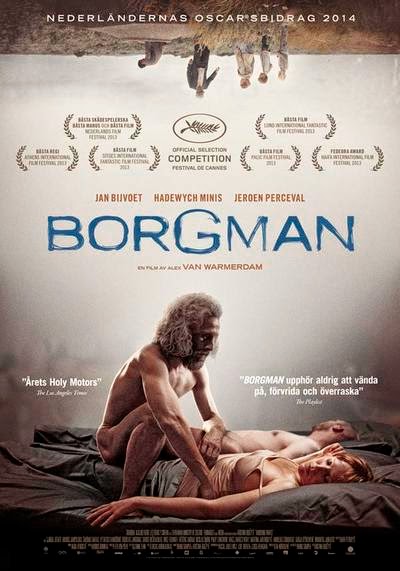
to be a return to the ebullience of his early films like Show Me Love and Together, following a string of four gravely dour projects that marked the Swedish director's output in the Aughts. His latest follows the ups and downs of an all-girl punk band in the 80's and is scheduled to open theatrically on June 6. While violent genre films from anywhere in the world are rarely my cup of grog, I've read enticing things about Alex van Warmerdam's Danish entry Borgman. The festival's capsule write-up suggests it's like Boudu Saved from Drowning as directed by David Lynch instead of Jean Renoir, and that's exactly how it comes across in the trailer. Along with François Ozon's Young & Beautiful, it's one of two SFIFF57 films that were in Cannes' main competition last year. Then in Benedikt Erlingsson's dryly humorous Of Horses and Men, a series of inventive vignettes explore relationships between man/beast and man/man in the Icelandic countryside. Friends who caught this 2014 Icelandic Oscar® submission at Palm Springs had only great things to say.

Four non-French European documentaries also make my SFIFF57 must-see list, starting with Joaquim Pinto's What Now? Remind Me, a 164-minute rumination on the director's year-long

co-habitation with toxic, mind-altering drugs used to combat his HIV and Hepatitis C. The film won FIPRESCI and Special Jury Prizes at last year's Locarno Film Festival. I missed seeing Lois Patiño's Coast of Death at Palm Springs and am therefore grateful to find it here. This narration-less portrait of Spain's rugged Galician coast employs a device whereby human figures are miniscule within long-shots of nature, but their individual voices are heard crystal clear on the film's soundtrack. One of my favorite films of last year's festival was P.O.V. award-winner Jem Cohen's Museum Hours, which was largely set inside Vienna's Kunsthistorisches Museum. Johannes Holzhausen's The Great Museum takes an in-depth, Frederick Wiseman-like look at this revered institution's inner workings as it prepares for a 2013 renovation. And last but certainly not least, Mark Cousins follows up his staggeringly great 15-hour doc series The Story of Film with the self-explanatory A Story of Children and Film.

Cross-published on The Evening Class.
Now that we've gotten the 57th San Francisco International Film Festival's roster of special programs out of the way, it's time to get into the nitty-gritty of this year's promising, 103-feature film line-up. In the next few film-415 entries, I'll be regionally surveying the titles which have grabbed my interest. As always we'll be starting with France, because that's where most of the films I wish to see hail from.

In addition to being alphabetically first in the festival catalog, Catherine Breillat's Abuse of Weakness is the film I'm most jonesing to see at SFIFF57. In this essentially autobiographical work, Isabelle Huppert plays a movie director incapacitated by a stroke, who falls prey to a handsome conman (portrayed by French rapper Kool Shen). Breillat has a long history with the festival, and appeared here in person when The Last Mistress opened the fest in 2008. Since then, SFIFF has brought us the director's two fairytale adaptations, Bluebeard (2009) and The Sleeping Beauty (2011) and I'm pleased they've followed through with her latest. Isabelle Huppert shows up again in the SFIFF57 selection Tip Top. She and Sandrine Kiberlain star as detectives investigating police corruption and a small town murder. The film has been described as a perverse, screwball neo-noir and comes from writer/director Serge Bozon, whose odd WWI musical La France played the festival in 2008. Alas, the fest has chosen not to bring us Huppert's turn as a horny mother superior in 2013's The Nun.

If memory serves, it's been a while since a bona fide French movie star attended SFIFF – Ludivine Sagnier accompanying Claude Chabrol's A Girl Cut in Two in 2008, perhaps – so I'm excited at the prospect of actor Romain Duris being here for the April 26 showing of Chinese Puzzle, along with director Cédric Klapisch. Duris, for those who can't place the name, co-starred in last year's SFIFF audience award winner, 1950's speed-typing rom-com, Populaire. I first took note of him when the festival showed Tony Gatlif's Gadjo Dilo in 1998. His new film closes out a loose trilogy, all directed by Klapisch, that includes L'Auberge Espagnole (2002) and Russian Dolls (2005). While there's only one screening at the festival, Chinese Puzzle will open at Landmark's Embarcadero Cinema on May 23. Another SFIFF57 French film scheduled to open soon locally (May 9 at Landmark's Opera Plaza) is François Ozon's Young & Beautiful, a matter-of-fact portrait of a teenage Parisienne's dabblings in prostitution, which screened in competition at Cannes last year.

SFIFF tends to pass on most films of LGBT interest – I've always assumed out of deference to the Frameline LGBT film fest which takes place each June. I was therefore surprised and not displeased to find at least seven such films in the 2014 line-up, four of them French or French co-productions. I'm most looking forward to Salvation Army, by first-time director Abdellah Taïa. Based on his autobiographical novel, it's the two-part story of a gay Moroccan teenager living with his family in Casablanca, whom we meet again 10 years later residing in Geneva. The film has received raves since its premiere at Venice last September and features cinematography by the incomparable Agnès Godard. Also on the LGBT tip is Robin Campillo's Eastern Boys, wherein a middle-aged Parisian gets more than he bargained for upon taking up with an Eastern European train station hustler. Campillo is best known for screenplays co-written with Laurent Cantet (Time Out, The Class) and Eastern Boys is the first film he's directed since 2004's zombie flick, Les revenants.

Actor Niels Arestrup is always recognizable for the older, macho types he's played in such films as The Beat My Heart Skipped and A Prophet. It should therefore be interesting to see him play a worn out, missing-persons detective who happens to be gay in Yossi Aviram's The Dune. The film co-stars Israeli heartthrob Lior Ashkenazi (Late Marriage, Walk on Water) as a long-estranged son and has been praised for its authentic depiction of an elderly gay couple. Finally, while I couldn't care less about haute couture and have shunned the entire glut of recent fashion designer documentaries, I'm intrigued by SFIFF57's bio-pic of Yves Saint Laurent. That's because Jalil Lespert, an actor I've always admired (Human Resources, the titular Le petit lieutenant), has for some reason chosen this as his third directorial feature. Lespert attended the festival in 2005 when he accompanied Robert Guédiguian's The Last Mitterrand to San Francisco. Yves Saint Laurent will also open at Landmark's Opera Plaza on July 4.

Two additional SFIFF57 French narrative features have caught my eye. If you've attended recent editions of the SF Film Society's French Cinema Now, you're familiar with the droopy-eyed, stringy-haired countenance of actor Vincent Macaigne. He starred in last year's FCN opening nighter 2 Autumns, 3 Winters, and the previous year's double-billed shorts A World Without Women and Stranded. Those shorts were directed by Guillaume Brac, whose new film Tonnerre finds Macaigne playing a rock star whose life gets complicated during a hometown visit. Then in Sophie Fillières' If You Don't, I Will, two of my favorite French stars, Emmanuelle Devos and Mathieu Amalric, pair up as an out-of-sorts couple (as they've done before in the films of Arnaud Desplechin). Amalric, it might be mentioned, is said to have an unforgettable cameo in the aforementioned The Dune.

One of the nicest surprises to be found in this year's line-up is the documentary Agnès Varda: From Here to There. In this 5-part French TV mini-series which originally aired in 2011, the 85-year-old "Godmother of the French New Wave" journeys around Europe doing what she does best, which is simply being Agnès Varda. Her itinerary includes conversations with directors Chris Marker, Alexander Sokurov, Carlos Reygadas and Manoel de Oliveira. The series can be enjoyed in one fell 225-minute swoop or spread across five short weekday matinees. Another French doc I'm looking forward to is Julie Bertuccelli's School of Babel, an intimate look at a Parisian "reception" class for immigrant students. Bertuccelli's last documentary to play the festival, 2007's The Whistling Blackbird, followed the production of veteran French-Georgian director Otar Iosseliani's Gardens in Autumn, and was considerably better than the film it observed in the making. Bertuccelli is also known for her narrative features Since Otar Left (2003) and The Tree (2010.)
Finally, as a 20th anniversary tribute, the festival will screen a 159-minute restored director's cut of Patrice Chéreau's Queen Margot, starring Isabelle Adjani, Daniel Auteuil, Virna Lisi and Vincent Perez. Steven Jenkins' florid description of the film in the catalog will jog your memory as to why it deserves to be revisited.
Cross-published on The Evening Class.
The SF Film Society (SFFS) revealed the full line-up for the eagerly anticipated 57th San Francisco International Film Festival (SFIFF57) at a Fairmount Hotel press conference last Tuesday. In addition to the previously announced opening and closing night films, Founders Directing Award and live music events, the following special programs were unveiled by Executive Director Noah Cowan and the Film Society's team of long-standing programmers:
● Writer and film historian David Thomson will receive SFIFF57's Mel Novikoff Award, which "acknowledges an individual or institution whose work has enhanced the filmgoing public's knowledge and appreciation of world cinema." The sure-to-be engaging Thomson will be interviewed by author Geoff Dyer, followed by a screening of Preston Sturges' 1941 screwball comedy, The Lady Eve, with Barbara Stanwyck and Henry Fonda.
● The festival's 2014 Kanbar Award for screenwriting will go to Stephen Gaghan (Traffic, Rules of Engagement), in a program that will feature a screening of 2005's Syriana.
● The Persistence of Vision Award, which "honors the achievement of a filmmaker whose main body of work is outside the realm of narrative feature filmmaking," has been awarded to British filmmaker (Young Soul Rebels) and installation artist Isaac Julien. The on-stage interview will be conducted by none other than writer/critic B. Ruby Rich. A showing of Julien's 2010 installation piece, Ten Thousand Waves starring Maggie Cheung, will follow their conversation.
● This year's Centerpiece Film is going to be Gia Coppola's teen drama Palo Alto, adapted from the short story collection written by James Franco (who also has a significant role in the film). Director Coppola, who happens to be Francis Ford's granddaughter, is expected to attend this Centerpiece presentation. (Palo Alto opens in theatres on May 16).
● A Conversation with K.K. Barrett, featuring the renowned production designer of such films as Her, Where the Wild Things Are and Being John Malkovich, has been added to the festival's Live & Onstage sidebar.
● Amongst this year's Master Classes and Salons, I'm especially drawn to The $11 Billion Dollar Year, a panel discussion about the film industry's future with reporter/critic Anne Thompson, Fandor co-founder Jonathan Marlow, Telluride's Gary Meyer and SFFS's brand new Executive Director Noah Cowan.
● As of this writing, the Peter J. Owens Award for acting and the State of Cinema Address remain TBA.
● In a sign of the times, I believe it's worth noting that with the exception of Tod Browing's 1927 The Unknown, and a handful of shorts, all SFIFF presentations this year will be digital, including the restorations and revivals.
Cross-published on The Evening Class.
I've had the good fortune to attend every San Francisco International Film Festival (SFIFF) since 1976 and the privilege of covering it as accredited press for eight years running. As has become a tradition here at film-415, on the eve of the festival's official press conference I've gathered together a rundown of what's already been announced for 2014's edition, followed by a wish list of 20 films I'm hoping to find in the line-up when it's unveiled Tuesday morning.
This year the festival made my job easy by issuing fewer-than-ever early announcements, especially regarding the recipients of its many awards and tributes. Still waiting TBA at this 11th hour are the Peter J. Owens Acting Award, the Maurice Kanbar Screenwriting Award, the Persistence of Vision Award, the Mel Novikoff Award, as well as the fest's Centerpiece Film and the question of who will deliver 2014's State of Cinema Address. All shall be revealed soon enough. Meanwhile, here's a glance at what we know thus far.
● The 57th SFIFF opens on Thursday, April 24 with a screening of The Two Faces of January, which marks the directorial debut of screenwriter Hossein Amini (Drive, The Wings of the Dove). The film premiered to positive reviews when it screened out of competition at this year's Berlin Film Festival, and the SFIFF Opening Night slot will be its North American premiere. Starring Kirsten Dunst, Viggo Mortensen and Oscar Isaac, the movie is based on a Patricia Highsmith ("The Talented Mr. Ripley") novel and is set in a lushly photographed Greece and Turkey in the early '60s. Director Amini is scheduled to be in attendance. This year's opening night party will be at the SOMA nightclub Public Works.
● The festival closes on May 8 with another directorial debut, this one from actor Chris Messina (who I had to imdb because I obviously don't watch enough television.) His film is called Alex of Venice and it stars Mary Elizabeth Winstead (had to look her up as well) as an attorney whose life changes when her stay-at-home husband (Messina) decides to take a break from it all. Both Messina and Winstead are expected to attend the screening. Alex of Venice arrives in San Francisco very soon after its world premiere at Tribeca. SFIFF57's closing night party takes place at The Chapel club, in the heart of the Mission District.
● This year's Founder's Directing Award goes to none other than the fabulously eclectic and talented Richard Linklater, whose debut feature Slackers played the festival in 1991 and whose most recent film, Before Midnight, closed last year's fest with the director in attendance. Linklater's tribute takes place at the Castro Theatre on Friday, May 2, with an on-stage interview, career clips reel and a screening of his 18th and most recent feature, the wildly acclaimed Boyhood. This event is destined to be a huge highlight of SFIFF57 – I arranged to take the night off from work the minute I heard about it.
● One of the festival's most popular events is the annual pairing of a silent film with a newly composed score, performed live by a contemporary music artist. Four years after his campy (and somewhat divisive) accompaniment to 20,000 Leagues Under the Sea, The Magnetic Fields' front man Stephin Merritt returns to SFIFF with his take on Tod Browning's 1927 creepy circus crime thriller The Unknown, starring Lon Chaney and Joan Crawford. (The film last played the Castro Theatre during the 2008 SF Silent Film Festival, with director Guy Maddin doing a live translation of its French inter-titles.) The second SFIFF57 live music event at the Castro will be Bay Area musician Thao Nguyen and her band, The Get Down Stay Down, performing alongside a diverse selection of short films that includes Chaplin's The Pawn Shop, animations by Harry Smith, vintage newsreels and some of Nguyen's own video work.
● Eleven films will compete for 2014's SFIFF New Directors Prize. I'm especially excited they've programmed Salvation Army, Abdellah Taïa's adaptation of his autobiographical novel about a gay Moroccan boy who later immigrates to Europe. It's a critically acclaimed film I wasn't expecting to see until June's Frameline LGBT festival. (For the record, there are a half dozen other undoubtedly Frameline-bound LGBT films I wouldn't mind seeing at SFIFF, like Xavier Dolan's Tom at the Farm and Guillaume Gallienne's multiple-César award-winning, Me, Myself and Mum.) The other New Directors Prize contender I'm hot to see is Benjamín Naishtat's History of Fear, a dystopian nightmare set in the Buenos Aires suburbs, which has drawn comparisons to the early works of Michael Haneke since its Berlin premiere. I've also heard terrific things about the Icelandic film, Of Horses and Men, and Mexico's The Amazing Catfish. Both the latter film, as well as Taïa's Salvation Army, boasts cinematography by renowned DP Agnès Godard.
● Eight films are in the running for SFIFF57's Golden Gate Awards Documentary Feature Competition. The only one even remotely on my radar is Hubert Sauper's We Come as Friends, which examines the human cost of neo-colonialism in the newly formed nation of South Sudan. To this day, Sauper's 2004 Oscar®-nominated Darwin's Nightmare remains the most disturbing and dispiriting doc I've ever seen. Perhaps his latest will make me feel even worse.
* * * * * * * * * * * * * * * * * * * * * * * * * * * * * *
Below is a list of 20 films that would comprise my ultimate SFIFF57 dream festival. They've been culled from a larger list I maintain throughout the year, making notes of promising new works from festival reports I read. Last year only two of my 20 films made the line-up, but I still managed to have a sublime festival experience. How will I fare this year?
My SFIFF57 Wish List
Abuse of Weakness (France, dir. Catherine Breillat)
Self-described provocatrice Catherine Breillat takes the autobiographical route, as she directs Isabelle Huppert as a Catherine Breillat-like film director who suffers a stroke and is subsequently swindled by a young con man.
Black Coal, Thin Ice (China, dir. Yi'nan Diao)
Winner of the top prize at February's Berlin Film Festival, it's probably too early to expect this stylized Chinese neo-noir to show up in these parts just yet. But I can still wish.
Club Sandwich (Mexico, dir. Fernando Eimbcke)
SFIFF screened this laid-back Mexican director's first two films, Duck Season (2004) and Lake Tahoe (2008) and will hopefully follow through with this droll comedy about a doting mother on vacation with her newly pubescent son.
The Disappearance of Eleanor Rigby: Him and Her (USA, dir. Ned Benson)
These are actually two separate films that take on the dissolution of a relationship from opposing gender-centric P.O.V.s. James McAvoy is Him and Jessica Chastain is Her, with a supporting cast that includes Isabelle Huppert, William Hurt and Viola Davis.
Exhibition (UK, dir. Joanna Hogg)
Joanna Hogg (Unrelated, Archipelago) is an acclaimed new British director about whom plenty has been written, yet none of her films have been seen in the Bay Area. Not even, weirdly enough, at our annual Mostly British festival. Is this the year we'll be brought up to speed?
Hard to Be a God (Russia, dir. Aleksei Gherman)
Russian master Gherman died last year, but not before (almost) completing work on this 3-hour phantasmagoric, medieval mind-fuck – only the third film he's made in 30 years. The other two, My Friend Ivan Lapshin and Khrustaliov, My Car! screened at previous SFIFF editions, giving me hope this highly anticipated extravaganza might be headed our way.
Jealousy (France, dir. Philippe Garrel)
Do we really need to see a third consecutive Philippe Garrel film about tormented relationships between artsy types starring Garrel's impossibly handsome son Louis? Not necessarily, but this one has earned the director his best reviews since 2005's Regular Lovers.
Manakamana (Nepal/USA, dir. Stephanie Spray, Pacho Velez)
From the folks at Harvard's Sensory Ethnography Lab (Sweetgrass, Leviathan) comes this heralded documentary consisting of only 12 shots, all long takes of passengers riding a cable car to a Nepalese mountaintop temple.
Miss Violence (Greece, dir. Alexandros Avranas)
It seems like forever, or at least a year or two, since we last witnessed an act of cinematic transgression from Greece. This one took the Best Director and Actor prizes at last year's Venice Film Festival.
Moebius (South Korea, dir. Kim Ki-duk)
Speaking of transgression, nobody pushes buttons harder than Kim and his latest film is said to take the cake. Variety's Leslie Felperin calls it "a gloriously off-the-charts study in perversity featuring castration, rape and incest" that fits "right inside the Korean king-of-wackitude's wheelhouse of outrageous cinema."
El Mudo (Peru, dir. Daniel Vega, Diego Vega)
The fraternal Peruvian writing/directing team of Daniel and Diego Vega follow-up 2010's sublime Octubre with another deadpan black comedy, this one winning a Best Actor nod at Locarno for lead Fernando Bacilio.
Night Moves (USA, dir. Kelly Reichardt)
With a cast that includes Dakota Fanning, Jesse Eisenberg and Peter Sarsgaard, this eco-terrorism thriller from Kelly Reichardt (Wendy and Lucy, Meek's Cutoff) will surely have a theatrical release later in the year, but the rave reviews from Venice and Toronto have me wanting to see it sooner rather than later.
Nobody's Daughter or Our Sunhi (South Korea, dir. Hong Sang-soo)
Prolific Korean master Hong released two new, well-received films in 2013, the first one at Berlin and then another at Locarno, where he won Best Director. Rather surprisingly, neither got programmed by Mill Valley or CAAMFest, leaving them available for possible SFIFF inclusion.
October November (Götz Spielmann)
German director Götz Spielmann follows up his 2008 masterpiece Revanche with this tale of two disparate sisters reuniting when their father takes ill. A curious omission from this year's Berlin & Beyond festival.
The Quispe Girls (Chile, dir. Sebastián Sepúlveda)
Three indigenous sisters in rural 1974 Chile face an end to their sheep-herding way of life thanks to the ominous encroachment of General Pinochet's rule. Starring the incomparable Catalina Saavedra (The Maid.)
Story of My Death (Spain, dir. Albert Serra)
The borderline experimental films of noted Catalonian director Serra have largely gone unseen in the Bay Area. His latest, an imagined meeting between Casanova and Dracula, is said to be his most accessible, winning the top prize at last year's Locarno Film Festival.
Stray Dogs (Taiwan, dir. Tsai Ming-liang)
Unlike his last feature, 2009's largely reviled Face, Tsai's latest won acclaim and a slew of awards on 2013's festival circuit, including Best Director and Actor at the Golden Horse Awards. The director's acteur fétiche, Lee Kang-sheng, stars as a father with two children struggling to survive on the streets of Taipei. A welcome consolation prize would be Journey to the West, a new Tsai film that recently premiered at Berlin.
Tarr Béla: I Used to be a Filmmaker (France, dir. Jean-Marc Lamoure)
An in-depth documentary look into the making of Hungarian maestro Bela Tarr's final masterpiece, 2011's The Turin Horse.
Tip Top (France, dir. Serge Bozon)
Isabelle Huppert and Sandrine Kiberlain star as detectives investigating a small town murder and police corruption in this perverse, screwball noir from actor/director Bozon. His last film, the WWI musical La France, screened at SFIFF in 2008.
When Evening Falls on Bucharest or Metabolism (Romania, dir. Corneliu Porumbiou)
Reviews were mixed for this latest formalist exercise from the director of 12:08 East of Bucharest and Police, Adjective, but I'm dying to see it anyway. I'd also be quite happy to see The Second Game, his even newer film which just premiered at Berlin.
Cross-published on The Evening Class.
Review – Beautiful 2013
The San Francisco International Asian American Film Festival rebranded itself CAAMFest last year, thereby completing its transition from a festival which dependably exhibited the latest works of established Asian auteurs, into what is now a film-music-food festival dominated almost exclusively by emerging filmmakers. Anyone in the Bay Area who wants to see the newest films from Tsai Ming-liang (Stray Dogs), Kim Ki-duk (Moebius), Lav Diaz (Norte, the End of History) or Hong Sang-soo (Nobody's Daughter, Our Sunhi) in a public setting had better hope they've earned a slot at next month's 57th San Francisco International Film Festival (program TBA April 1.)
Oh well. Things change. And it's not like CAAMFest 2014, which runs from March 13 to 23, is bereft of familiar names. This year's festival features a 20th anniversary screening of Ang Lee's Eat Drink Man Woman, as well as a three-film tribute to legendary Hong Kong producer Run Run Shaw, who passed away this year at age 107. For those who either missed it at last year's Mill Valley Film Festival or can't wait for its local theatrical release on April 4, there's also Rithy Panh's Oscar-nominated The Missing Picture from Cambodia. In this devastating, not-to-be-missed autobiographical essay film, Panh uses carved figurines, rudimentary dioramas, archival footage and voiceover narration to reconstruct memories of his 5-year enslavement by the Khmer Rouge.

Then there's Kiyoshi Kurosawa's Beautiful New Bay Area Project, one of four shorts that comprise Beautiful 2013, the most recent omnibus co-production between the Hong Kong International Film Festival and Youku, China's version of YouTube. My personal highlight of last year's CAAMFest was the Beautiful 2012 entry Walker. In this 27-minute minimalist masterpiece, director Tsai Ming-liang's perpetual muse, actor Lee Kang-sheng, posed as a monk walking at a snail's pace through a series of flawlessly composed Hong Kong cityscapes. (Tsai has since expanded that idea into a feature-length film called Journey to the West, which premiered at the recent Berlin Film Festival). This year's Beautiful marquee name is Kurosawa, whom this festival fabulously feted with an in-person retrospective and tribute back in 2009. The 29-minute Beautiful New Bay Area Project is set on the docks of Yokohama, where a young, unhinged urban developer becomes obsessed with a female dockworker. After his attentions are repeatedly spurned, he steals her nameplate from work, setting off a lengthy set-piece in which she kicks the ass of every security guard, executive and office worker who stands between her and her precious nameplate. It's not quite as thrilling as the swimming pool scene in Kurosawa's 2012 TV mini-series Penance – whereby a female kendo master battles a knife-wielding maniac around a pool of terrified schoolchildren – but it's still awfully fun. The ominous mise-en-scene, poetic camera set-ups, unsettlingly music and unexpected laughs are all pure Kurosawa Kiyoshi. Fans of his features (Cure, Bright Future, Tokyo Sonata) definitely won't want to miss seeing the Japanese master's latest short on the big screen.

As with most portmanteau collections, the other three shorts in Beautiful 2013 are a mixed bag. Every bit as good as the Kurosawa is the visually arresting 1 Dimension, directed by cinematographer Lü Yue (John Woo's Red Cliff, Zhang Yimou's To Live and Shanghai Triad). Employing silhouetted figures against a backdrop of Chinese scroll paintings, Lü stages the ancient tale of "Prince Piety from the Land of Toto," in which a young royal goes on a six-year journey to acquire the life lessons necessary to be a good king. That's preceded by the wryly dour A New Year, the Same Day by Taiwan's Wu Nien-jen, who's best known as a screenwriter (Hou Hsiao-hsien's A City of Sadness and The Puppetmaster) and actor (star of Edward Yang's Yi Yi). On New Year's Day, a put-upon husband and father who describes himself as a "fat and exhausted slave," calls a family powwow and tries to elicit a bit of succor from his crabby wife and distracted teens. The best response comes from the daughter, who squeals with delight, "I posted on Facebook that my family is falling apart and I got 30 "likes!" Beautiful 2013's weakest entry is saved for last, the borderline insipid Indigo from Hong Kong director Mabel Cheung (An Autumn's Tale, The Soong Sisters), in which a nightclub dance instructor (a vibrant Elaine Jin) sends her resentful teenage daughter out to look for her mentally challenged little brother who's gone missing.
* * * * * * * * * * * * * * * * * * * * * * * * * * * * * * * * * * * * * * * * * * * * * * * * * * * * * *
Elsewhere in the CAAMFest 2014 line-up:
 ● In addition to Cambodia's The Missing Picture, the festival brings us two more films which were their respective country's Oscar® submission. Anthony Chen's directorial debut Ilo Ilo is set during a time of economic crisis and observes what happens when a joyless Singapore family brings a Filipina maid into their household. Ilo Ilo took the prize for Best Feature at last year's Golden Horse Awards (essentially the Academy Awards for Chinese language art/indie films), as well as Best Original Screenplay, Supporting Actress and Best New Director for Mr. Chen, who is scheduled to attend the CAAMFest screenings. The festival is also showing Yûya Ishii's The Great Passage, which was Japan's surprise Oscar® choice over Hirokazu Koreeda's vastly superior Like Father, Like Son. Over the course of 134 minutes, the film chronicles the laborious 15-year task of creating a "living" Japanese dictionary, and succeeds as often as not in making it interesting. The film stars Ryûhei Matsuda (the boy who drove the other samurai wild with desire in Nagisa Ôshima's final film, Taboo) as the painfully awkward linguistics nerd who shepherds the project, and the ubiquitous Jô Odagiri (the films of Kiyoshi Kurosawa, Hirokazu Koreeda, Kim Ki-duk, Seijun Suzuki, Shinji Aoyama and others) as his more gregarious co-worker.

● I'm always interested to learn which films top the box office charts around the world. This year's CAAMFest boasts three which were the 2013 blockbusters in their country of origin. The only one I've previewed is Banjong Pisanthanakun's Pee Mak from Thailand, a well made, really stupid, but funny-enough lampoon of a classic Thai ghost story. I was glad to have seen a more serious version of the story at a previous edition of this festival – the film's title and year escape me – so I had a clue what was being spoofed. Be prepared to lose a few brain cells watching this one. South Korea's top performer of 2013 was the "high-octane thriller" Cold Eyes, which chronicles a police surveillance operation's efforts against a sophisticated robbery ring. The film is a remake of the 2007 Hong Kong hit, Eye in the Sky, and is one of CAAMFest 2014's two Centerpiece Presentations. It should be a blast to watch on the Castro Theatre's big screen, with co-director Jo Ui-seok scheduled to attend. CAAMFest 2014's Opening Night movie at the Castro will be Viet Nam's 2013 B.O. champ, Ham Tran's How to Fight in Six Inch Heels. Described loosely as a rom-com mash-up of The Devil Wears Prada and Mean Girls, the film stars Bay Area native Kathy Uyen.

● CAAMFest 2014's other Centerpiece Presentation at the Castro will be Grace Lee's documentary, American Revolutionary: The Evolution of Grace Lee Boggs, which celebrates the life and work of the 98-year-old Chinese-American political activist-writer-philosopher who was also an outspoken advocate for African Americans. Both director Grace Lee and subject Grace Lee Boggs will attend. Earlier in the day there'll be an In Conversation with Grace Lee at the Sundance Kabuki Cinemas. CAAMFest 2014 will also feature a revival screening of Lee's 2007 mockumentary American Zombie, which I originally reviewed for The Evening Class in my first year of blogging about this festival.
Last January I walked out of the Palm Springs International Film Festival screening of Rafaël Oullet's devastating familial drama Camion – an unknown entity I had chosen based on an affection for French-Canadian cinema and a Best Director prize at Karlovy Vary – assured that I had just watched what would become my favorite film of 2013. Over the next 12 months, the only work that came close to usurping the top spot was Alain Guiraudie's XXX-rated formalist thriller, Stranger by the Lake, which topped Cahiers du Cinema's 2013 list and barely registered elsewhere, a lapse I expect will be rectified once the good folks at Strand Releasing put it out in the U.S. next month.
I only saw 143 films in theatres this year – 41 of those being revival/repertory screenings – my smallest personal tally in almost two decades. Still, I managed to watch a helluva lot of excellent movies in 2013. Below is a list of my ten favorite narrative features, 28 honorable mentions and a dozen favorite documentary features.
Ten Favorite Narrative Features
Camion (Canada, dir. Rafaël Oullet)
Stranger by the Lake (France, dir. Alain Guiraudie)
Blue is the Warmest Color (France, dir. Abdellatif Kechiche)
Before Midnight (USA, dir. Richard Linklater)
Museum Hours (Austria/USA, dir. Jem Cohen)
Like Father, Like Son (Japan, dir. Hirokazu Koreeda)
Vic+Flo Saw a Bear (Canada, dir. Denis Côté)
Crystal Fairy (Chile, Sebastián Silva)
Spring Breakers (USA, dir. Harmony Korine)
The Strange Little Cat (Germany, dir. Ramon Zürcher)
Narrative Feature Honorable Mentions
American Hustle (USA, dir. David O. Russell)
Barbara (Germany, dir. Christian Petzold)
Berberian Sound System (UK, dir. Peter Strickland)
Blancanieves (Spain, dir. Pablo Berger)
Blue Jasmine (USA, dir. Woody Allen)
The Delay (Uruguay, dir. Rodrigo Plá)
Frances Ha (USA, dir. Noah Baumbach)
Fruitvale Station (USA, dir. Ryan Coogler)
Gorbaciof (Italy, dir. Stefano Incerti)
Gravity (USA, dir. Alfonso Cuaron)
The Great Beauty (Italy, dir. Paolo Sorrentino)
Hannah Arendt (Germany, dir. Margarethe von Trotta)
Her (USA, dir. Spike Jonze)
A Hijacking (Denmark, dir. Tobias Lindholm)
In the House (France, dir. François Ozon)
Key of Life (Japan, dir. Kenji Uchida)
Like Someone in Love (France/Japan, dir. Abbas Kiarostami)
Mai Morire (Mexico, dir. Enrique Rivero)
Magic Magic (Chile/USA, dir. Sebastián Silva)
Mud (USA, dir. Jeff Nichols)
Our Children (Belgium, dir. Joachim Lafosse)
Paradise: Love (Austria, dir. Ulrich Seidl)
Pieta (South Korea, dir. Kim Ki-duk)
Pit Stop (USA, dir. Yen Tan)
The Place Beyond the Pines (USA, dir. Derek Cianfrance)
The Sightseers (UK, dir. Ben Wheatley)
Something in the Air (France, dir. Olivier Assayas)
Stoker (USA, dir. Park Chan-wook)
Dozen Favorite Documentary Features
The Act of Killing (Denmark/UK/Norway, dir Joshua Oppenheimer)
Belleville Baby (Sweden, dir. Maria Engberg)
Bettie Page Reveals All (USA, dir Marc Mori)
Drought (Mexico, dir Everardo Gonzalez)
I Am Divine (USA, dir. Jeffrey Schwartz)
Iceberg Slim: Portrait of a Pimp (USA, dir. Jorge Hinojosa)
Leviathan (France/UK/USA, dir. Lucien Castaing-Taylor, Verena Paravel)
Mercedes Sosa: The Voice of Latin America (Argentina, dir. Rodrigo H. Vila)
Paul Bowles: The Cage Door is Always Open (Switzerland/Morocco, dir. Daniel Young)
The Search for Emat Bakia (Spain, dir. Oskar Alegria)
Stories We Tell (Canada, dir. Sarah Polley)
Twenty Feet from Stardom (USA, dir. Morgan Neville)