skip to main |
skip to sidebar
It would be an understatement to say that tomorrow morning's press conference for the 56th San Francisco International Film Festival (SFIFF56) will yeild surprises. The SF Film Society (SFFS) has held its cards closer to the chest this year, with most film titles and at least five major awards (Peter J. Owens Acting Award, Founders Directing Award, Kanbar Screenwriting Award, Golden Gate Persistence of Vision Award and Mel Novikoff Award) still to be announced. In addition, this year film society members were not sent a PDF of the festival's mini-guide prior to the press conference, which has helped to amp up the suspense. Here's an overview of what's already been announced, followed by some fanciful speculation on what we might expect tomorrow, and a wish list of 20 films I hope made the cut.
● The festival opens at the Castro Theatre on April 25 with Scott McGehee and David Siegel's What Maisie Knew. Loosely based on Henry James' 1897 novel, the film traces a bitter custody battle between a former rock star (Julianne Moore) and her art dealer husband (Steve Coogan), as experienced by their six-year-old daughter Maisie (newcomer Onata Aprile). It premiered last year at Toronto to strong reviews. Former San Francisco residents McGehee and Siegel have attended SFIFF twice before, with Suture in 1994 and The Deep End in 2001. Both are expected on opening night, along with child actress Aprile.
● Closing out the fest 15 days later will be one of the most anticipated movies of the year, Richard Linklater's Before Midnight. Once again starring Julie Delpy and Ethan Hawke, it continues the romantic journey that sparked in 1995's Before Sunrise and was reignited in 2004's Before Sunset. Linklater attended SFIFF just last year with Bernie, and he's expected to attend May 9's closing night at the Castro Theatre, along with Julie Delpy. (The film will open at a SF Landmark Theatre on May 31.)
● SFIFF56's Centerpiece Film is Jacob Kornbluth's documentary Inequality for All, in which ex-U.S. Secretary of Labor, political economist and current UC Berkeley professor Robert Reich examines our country's widening economic gap. The film premiered at Sundance, where it won a Special Jury Prize. Kornbluth is the brother of Bay Area playwright/actor Josh Kornbluth and previously directed the film adaptation of his brother's play The Haiku Tunnel. Both Jacob Kornbluth and Reich are expected to attend the screening on May 4.
● One of this year's hottest tickets, in fact it's already at rush, is director Steven Soderbergh's State of Cinema Address on April 27. This annual event was inaugurated 10 years ago and past addressers have included Tilda Swinton, B. Ruby Rich and Walter Murch. Other announced SFIFF56 Live & Onstage Programs include Inside the Drunk Mind of Derek Waters, Show or Tell and No More Road Trips?, the latter a filmic coast-to-coast U.S. tour comprised of clips from over 9,000 home movies, assembled by film archivist Rick Prelinger.
● This year's silent film with live musical accompaniment at the Castro will be Waxworks, a 1924 German expressionist horror/fantasy from director Paul Muni (The Cat and the Canary). It's the tale of a poet hired to write back stories for three wax museum figures: the Caliph of Baghdad, Ivan the Terrible and Jack the Ripper, portrayed respectively by a power trio of German actors Emil Jannings, Conrad Veidt and Werner Kraus. Performing alongside the film on May 7 will be Mike Patton, ex-vocalist/multi-instrumentalist of bands such as Faith No More and Mr. Bungle, accompanied by percussionists Scott Amendola, Matthias Bossi and William Winant.
● Ten films will compete for SFIFF56's New Directors Prize. The only one already on my radar is Adrián Saba's The Cleaner from Peru, which I missed at this year's Palm Springs International Film Festival. I've heard very favorable things from friends and it won that fest's New Voices/New Visions award. Scanning the other nine films on the list, I'm intrigued by the pedigree of Youth, directed by Justine Malle (daughter of Louis) and starring Esther Garrel (daughter of Philippe and sister of Louis).
● The festival's Golden Gate Documentary Competition features a dozen films, including one I'm especially excited to see. Illian Metev's Sofia's Last Ambulance received rave reviews when it screened in Cannes' Critics Week last year, and it follows a stressed paramedic team as they respond to emergencies in the Bulgarian capital. I'm also interested in After Tiller, a notable doc from Sundance about the few remaining U.S. doctors who perform third trimester abortions.
As someone who obsessively tracks international art films from their premieres to their eventual theatrical/VOD/DVD release (or not), I can't help but speculate which ones will turn up at our own hometown festival. Whatever SFIFF56 brings us, the festival's importance to Bay Area cinephiles will be greater than ever this year. San Francisco lost five arthouse screens in 2012 (including the film society's own cinema at Japantown's New People). Now rumor has it that the city's biggest, five-screen arthouse will be closing for extensive renovations this summer and fall. This means that even films from major distributors may have to forego Bay Area theatrical release, making festival showings our only chance to catch them on the big screen.
Here are a few high interest films I don't expect to hear about at tomorrow's press conference. YBCA Film/Video curator Joel Shepard recently announced that he's bringing Ulrich Seidl's acclaimed Paradise trilogy and Carlos Reygadas' controversial Post Tenebras Lux to that venue in the coming months. Jeff Nichols' Mud (his follow-up to Take Shelter) and François Ozon's In the House have a scheduled SF Landmark opening date of April 26, the day after the festival begins. If Fruitvale, the Sundance-winning film about the final day of BART murder victim Oscar Grant were to be in the festival, I would have expected it in an Opening Night, Closing Night or Centerpiece slot. I'd love to be wrong.
I imagined Pablo Trapero's White Elephant a shoe-in for SFIFF56 until I read that Strand Releasing is sending it straight to DVD – literally tomorrow! I caught it at Palm Springs, along with Marco Bellocchio's Dormant Beauty, Xavier Dolan's Laurence Anyways, Peter Greenaway's Goltzius and the Pelican Company and Sergei Loznitsa's In the Fog, all strong contenders for the SFIFF56 roster. At that same festival I admired Kim Ki-duk's Venice Golden Lion winner Pieta and Joachim Lafosse's Our Children. Both, however, were part of the Rafael Film Center's "For Your Consideration" series in January and consequently unlikely for SFIFF inclusion. Noah Baumbach's Frances Ha with Greta Gerwig already has a May 24 local opening date, but I wouldn't mind seeing it sooner. Other desirable films with mid-to-large U.S. distributors that just might be in the festival include Andrew Bujalski's Computer Chess, Sebastián Silva's Crystal Fairy, Tobias Lindholm's A Hijacking and Haifaa Al-Mansour's Wadjda, the first feature film shot entirely in Saudi Arabia. I'm also thinking that the apocalyptic Eli Roth-starring Aftershock and Rob Zombie's The Lords of Salem have a potential shot at SFIFF56's Late Show sidebar.
Finally, here is my 20-film wish list for the 56th San Francisco International Film Festival. To the best of my knowledge, all of these films currently have very limited or zero U.S. distribution.
3 (Uruguay, dir. Pablo Stoll)
The Act of Killing (Denmark, dir. Joshua Oppenheimer)
Burn It Up, Djassa (Ivory Coast, dir. Lonesome Solo)
Camille Claudel, 1915 (France, dir. Bruno Dumont)
Celestial Wives of Meadow Mari (Russia, dir. Aleksei Fedorchenko)
Child's Pose (Romania, dir. Calin Peter Netzer)
Dream and Silence (Spain, dir. Jaime Rosales)
Episode in the Life of an Iron Picker (Bosnia/Herzegovina, dir. Danis Tanovic)
Escape from Tomorrow (USA, dir. Randy Moore)
Final Cut: Ladies and Gentlemen (Hungary, dir. György Pálfi)
Gloria (Chile, dir. Sebastián Lelio)
Horses of God (Morocco, dir. Nabil Ayouch)
I Used to be Darker (USA, dir. Matthew Porterfield)
The Last Time I Saw Macao (Portugal, dir. João Pedro Rodrigues)
Leviathan (France, dir. Lucien Castaing-Taylor)
The Nun (France, dir. Guillaume Nicloux)
The Repentant (Algeria, dir. Merzak Allouache)
Rhino Season (Iran, dir. Bahman Ghobadi)
Thy Womb (Philippines, dir. Brilliante Mendoza)
Vic + Flo Saw a Bear (Canada, dir. Denis Côté)
 For 30 years, the San Francisco International Asian American Film Festival was saddled with an unwieldy moniker and an un-catchy acronym, SFIAAFF (pronounced SFEE-ahf). At some point, friends and I just started calling it "The Asian." Now, for what would have been its 31st edition, SFIAAFF has rebranded itself CAAMFest and expanded its focus as a "world class festival of contemporary Asian American creative expression in film, music and food." (CAAM, for those just tuning in, is the Center for Asian American Media, parent organization of the festival.) While we at film-415 appreciate music and food as much as the next movie-goer, our interest in this year's fest remains squarely on new works by emerging and established Asian auteurs.

This year I'm very pleased about the return of what was once a regular feature of this festival – a noted Asian director accompanying a mini-retrospective of their work. Singaporean filmmaker Royston Tan will be at the Pacific Film Archive for a screening of 15, his poignant and punky feature debut about desperate Singapore youth, which screened at SFIAAFF in 2004 (and made my Top Ten that year.) The 15 screening will be followed by a conversation between Tan and critic/artist/filmmaker Valerie Soe. The retrospective also includes 881, a fun but ultimately exhausting camp musical comedy SFIAAFF played in 2008, and his latest work, Old Romances. This tranquil and bittersweet documentary about dozens of extant Singapore enterprises is stylistically removed from the director's earlier works. Lovingly photographed images of everything from old beauty salons and bookstores to a crocodile farm and Japanese cemetery are accompanied by off-screen reminiscences by customers, proprietors and unidentified observers. These voiceovers have the tinny quality of phone conversations, supplementing the movie's old-timey vibe. All of the film's spoken English is thankfully subtitled and the generic music track is an occasionally unwanted distraction.

The other six films I chose to preview – by DVD screener or on-line streaming – all come from CAAMFest's CinemAsia sidebar. The best of the bunch is Beautiful 2012. This portmanteau of four shorts produced by Youku (China's YouTube), includes a gorgeous new 27-minute work from Tsai Ming-liang called Walker. A new Tsai film is especially welcome considering his last feature, Face, never appeared in the Bay Area or got a Region 1 DVD release. In Walker, the director's enduring muse, actor/director Lee Kang-sheng, plays a barefoot monk whom we observe walking – at a barely discernible pace – through a series of bustling Hong Kong cityscapes. Except for one quick sequence, Tsai's camera never moves and some of his compositions are enough to make one gasp in pleasure. The viewer is invited to focus on the monk's glacial progress, or take in the many diversions that populate the frame (including a few curious passers-by who look back at us through the camera). Antithetical humor comes into view as the monk crosses paths with a gaudy ice cream truck, and in another sequence, a men's underwear billboard. Pay close attention for the sweet shout-out to 2001's What Time is It There?. While Walker probably won't win the Taiwanese filmmaker new fans, abiding enthusiasts should consider this required viewing.

Fortunately, there's a lot to more admire in Beautiful 2012. The program begins with You Are More Than Beautiful from South Korean director Kim Tae-Yong, best known for the schoolgirl ghost movie, Memento Mori. In this playful and moving narrative, a spunky actress is hired to portray an irritable young man's fiancé. He brings her to a hospital to meet his dying father, but they arrive too late. Or do they? Tsai's Walker appears second and is followed by Gu Changwei's Long Tou. Gu is a renowned cinematographer who shot films for China's top directors (Zhang Yimou's Red Sorghum, Chen Kaige's Farewell My Concubine, Jiang Wen's Devils on the Doorstep). His short is the most disjointed and enigmatic of the bunch, a cryptic condemnation of China's past, present and, in the film's final shot, an apocalyptic future. Beautiful 2012 draws to a close with Ann Hui's My Way, an interesting enough portrait of a MTF transgender's travails starring famous Hong Kong actor Francis Ng.
 Elsewhere in the CinemAsia sidebar, adherents of experimental Thai director Apichatpong Weerasethakul won't want to miss Mekong Hotel, a languorous 57-minute featurette full of the filmmaker's trademark themes (reincarnation, troubled ghosts) and stylistic devices (the film ends with a static, 6-minute shot of Mekong River jet-skiers observed from a great distance). While I enjoyed Mekong Hotel, I'm not aching to see it again – something I couldn't say about Weerasethakul's previous works. South Korean director Meul O's debut film Jiseul tells of a little known incident in which the army – at the instigation of the U.S. – massacres an entire island village wrongly suspected of being communist sympathizers. Jiseul's narrative makes regular switchbacks between the occupied village, where several soldiers are tortured or killed for refusing to obey orders, and the villagers hiding in forest caves. The film, which won the Grand Jury Prize for World Cinema at Sundance, is a bit murky in conveying historical
  and political context (awkward subtitles don't help), but the stunning wide-screen B&W cinematography is not to be missed. Then in Sion Sono's The Land of Hope, we witness the calamitous effects that a fictional, Fukushima-like nuclear disaster has upon one family. It's an effective, straightforward and heartfelt drama that can't help but seem lame when held up to the outlandish creativity of Sono's previous work (Exte: Hair Extensions, Love Exposure, Cold Fish.)
Two remaining CinemAsia films I previewed offer unflattering views of life in contemporary China. Sixth Generation director Zhang Yuan hit the scene 20 years ago with the scrappy Beijing Bastards and is considered China's first "indie" filmmaker. In his more accomplished recent work Beijing Flickers, a suicidal young man and his circle of quirky, societal misfits struggle to find a place in an unkind world. The film possesses a wanna-be Wong Kar-wai vibe of handsome photography and rambling voiceover. It also starts to feel pointless and interminable toward the end of its 96 minutes. The thing zips by, however, compared to Ying Liang's austere, 70-minute docu-drama When Night Falls. I'm at a loss to explain the heap of critical praise this film has received, as I was when Liang's ham-fisted feminist polemic The Other Half screened at the 50th San Francisco International Film Festival in 2007.

When Night Falls is based on a famous case in which a young man murdered six Shanghai policemen as retribution for alleged maltreatment during an arrest for unregistered bicycle possession. The real scandal is that his mother was promptly abducted by officials and held in a mental hospital for 143 days and it is her story upon which the film focuses. Following release, her efforts to visit her son and assemble a case in his defense are repeatedly thwarted, and media attention becomes an unwelcome distraction. Then one day she learns that he has been summarily executed without notice. The film attempts to re-enact her story and it should have made for an intensely compelling drama, but for whatever reason Liang focuses mainly on extraneous non-events, such as the mother's efforts to regain entry to her apartment after locking herself out, her search for a store with a functioning copy machine, filling out post office forms and other inanities. Critics have called the film a heart wrenching indictment of China's criminal justice system. When Night Falls is also cold, plodding, butt ugly and it completely failed to move me. There's a stunningly powerful image in the final scene that arrives much too late. Non-pro actor Nai An won a Best Actress prize at last year's Locarno Film Festival, as did Liang for Best Director. In his write-up for The New Yorker, Richard Brody explains why he considers this film – and Liang's The Other Half – to be masterpieces. See and judge for yourself.
Here's a brief rundown of a few other possible CAAMFest 2013 highlights:
The premiere edition of CAAMFest kicks off on Thursday, March 14 at the Castro Theatre. The opening night film is Evan Jackson Leong's documentary Linsanity, which profiles Jeremy Lin, the Asian American NBA basketball star and Palo Alto native. I missed the press screening, but friends who care about sports even less than I say it's terrific. If you don't already have tickets, you're out of luck as the film has gone to rush. As is customary, the Opening Night Gala takes place at the Asian Art Museum, where revelers will have the opportunity to see the China's Terracotta Warriors exhibit.

The festival returns to the Castro on Sunday, March 17 for a full day of screenings, including Deepa Mehta's Midnight's Children, based on and adapted by Salman Rushdie from his acclaimed novel. It's this year's Centerpiece Film and actors Satya Bhabha and Samrat Chakrabarti are expected to attend. Earlier in the day, there's a Special Presentation of Mira Nair's latest, The Reluctant Fundamentalist, starring Kiefer Sutherland, Riz Ahmed, Kate Hudson and Liev Schreiber. In between these two programs there's an LGBT shorts collection called Queer Convergence, one of six shorts programs at CAAMFest.
CAAMFest shines a Spotlight on the one and only Astro Boy, currently celebrating his 60th anniversary, with an exhibit at the Superfrog gallery and a screening of David Bowers' 2009 animated movie, Astro Boy (with voices by Nicolas Cage and Charlize Theron).
Memories to Light: Asian American Home Movies is a new CAAM initiative that seeks to "recover and make accessible a moving image record of the Asian American experience through home movies." The first official program of the series will be presented by acclaimed local filmmaker Mark Decena.
After taking last year off, the festival's Out of the Vaults presentation returns with a screening of The Monkey King: Uproar in Heaven, which has gone through a frame-by-frame restoration and 3-D rendering. This film from the early 60's is generally considered China's greatest work of animation and was released shortly before the Cultural Revolution shut down China's film industry
The San Francisco Silent Film Festival's (SFSFF) one-day winter program has become a welcome tradition, helping silent film fanatics endure the long months between the organization's main festival held each July. While last year's winter event took the form of a triumphant mounting of Abel Gance's Napoleon at Oakland's Paramount Theatre, this year it's back to the Castro Theatre for a single 13-hour marathon of silent era classics. Transpiring on Saturday, February 16, Silent Winter 2013's five programs – a silent Snow White, a trio of Buster Keaton shorts, a Douglas Fairbanks blockbuster, Mary Pickford's last silent and F.W. Murnau's Faust – are all SFSFF premieres and I can't imagine missing out on any of them. Here's a closer look at what's in store.
10:00 A.M. Snow White (1916, USA, dir. Searle J. Dawley)

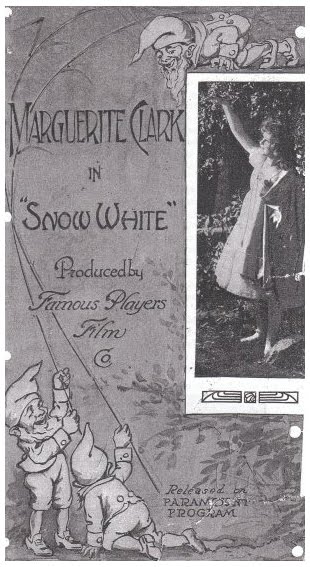
Legend has it that a 16-year-old newsboy named Walter Elias Disney attended a free screening of this movie at the Kansas City Convention Center in 1917, and it became the prime inspiration for his 1937 feature debut, Snow White and the Seven Dwarfs. Director Dawley already had film versions of Hansel and Gretel (1909), Frankenstein (1910) and A Christmas Carol (1910) under his belt when he adapted Winthrop Ames' popular 1912 Broadway stage play. Actress Marguerite Clark, who starred in the original stage version, returned to portray Snow White at the age of 33. Standing 4' 10" tall, the diminutive Clark was Hollywood's second biggest movie star in the years immediately following WWI (Mary Pickford being first), and of the 40 movies she made only three exist today. Snow White was also considered lost until materials discovered in a Dutch film archive led to a new restoration by the George Eastman House. This screening will be introduced by J.B. Kaufman, author of "Snow White and the Seven Dwarfs: The Creation of a Classic," which was released in conjunction with the Walt Disney Family Museum's ongoing exhibition of the same name. While the film is considered static and stagey even by 1916 standards, it is appreciated today for its imaginative art direction and Clark's spritely performance. Incidentally, the dwarfs in this early version of Snow White are named Blick, Flick, Glick, Snick, Plick, Whick and Quee. Accompaniment will be provided by Donald Sosin on grand piano.

12:00 Noon Think Slow, Act Fast: Buster Keaton Shorts
One Week (1920), The Scarecrow (1920), The Playhouse (1921) (USA, dir. Edward F. Cline, Buster Keaton)

Almost every SFSFF event includes a movie spotlighting the comic genius of Buster Keaton, and rightly so. This program gathers three shorts made immediately after The Great Stone Face outgrew the aegis of Fatty Arbuckle and began directing his own films. One Week is the hysterical tale of newlyweds attempting to build a house from a do-it-yourself kit and is the only one of the day's films I've seen previously. (I first encountered One Week at a 2003 screening in Paris that was introduced by Japanese director Hideo Nakata (The Ring, Dark Water) and saw it more recently at 2012's SF International Film Festival, with rock band tUnE-yArDs providing musical accompaniment.) The Scarecrow is best known for the Rube Goldberg-ian space and labor-saving devices that share a cramped house with Keaton and actor Big Joe Roberts, as well some spectacular chase sequences. The Playhouse's claim to fame is a variety show in which Keaton, through some extremely innovative camera trickery, plays all the performers and audience members. This program will be introduced by SFSFF board member and Keaton acquaintance Frank Buxton. Donald Sosin again accompanies on grand piano.

2:30 P.M. The Thief of Bagdad (1924, USA, dir. Raoul Walsh)

After being thrilled by the daring-do of Douglas Fairbanks' The Mark of Zorro at last summer's festival, I'm psyched that SFSFF has programmed another of his famous vehicles this soon. Thief was Hollywood's first million dollar production and was supposedly Fairbanks' favorite amongst all his movies (he was 40 at the time of filming.) Apart from seeing Fairbanks himself, I can't wait to spend two hours and 40 minutes savoring William Cameron Menzies opulent set design, numerous special effects which include flying carpets, winged horses and sea monsters, and last but not least, Anna Mae Wong as the princess' Mongol slave. I've heard some grousing about the film's digital projection, albeit in a new 2K restoration, but the opportunity to see this on the big Castro Theatre screen, at least for me, trumps any quibbles I might have over format (everything else at the SFSFF Winter Event will be in 35mm). Introducing the film will be Jeffrey Vance, author of the definitive 2008 biography, "Douglas Fairbanks," and Fairbanks "aficionado extraordinaire" Tracey Goessel. Accompaniment will be by the incomparable Mont Alto Motion Picture Orchestra.

7:00 P.M. My Best Girl (1927, USA, dir. Sam Taylor)

Following a short dinner break, the evening's program begins with Mary Pickford's farewell to silent cinema. Released just three weeks after The Jazz Singer, this romantic comedy is considered by film scholars to be one of her best. (Pickford would win a Best Actress Oscar® for her first talkie, Coquette, but it was considered more of a testament to her power in Hollywood than a vote for the performance itself.) My Best Girl finds "America's Sweetheart" playing a Five and Dime stock clerk forced to train a handsome new employee (Charles "Buddy" Rogers), who in short order is revealed to be the boss' son in disguise. Pickford claimed to have prepared for the role by working as a salesclerk disguised with horn-rimmed glasses, until customers started getting wise. Rogers, fresh from his triumph in the previous year's Oscar®-winning Wings, would marry Pickford in 1936 following her divorce from Douglas Fairbanks, a marriage that lasted until Pickford's death in 1979. Be on the lookout for an uncredited appearance by Carole Lombard as a "Flirty Salesgirl." Once again, Donald Sosin accompanies on grand piano.

9:00 P.M. Faust (1926, Germany, dir. F.W. Murnau)

As it so often does with the SFSFF, a long day at the Castro Theatre fittingly ends with something dark and creepy. This time it's Murnau's acclaimed adaptation of the Faust legend, in which a learned man sells his soul to the devil. Coming just four years after his equally eerie Nosferatu, this masterpiece of German Expressionism would turn out to be Murnau's last European film. Indeed, when Faust premiered in Berlin, Murnau was already in Hollywood shooting his immortal Sunrise. Due to its elaborate production design and numerous special effects, Faust took six months to shoot and was German studio UFA's most expensive film to date, at least until the following year when they took on Fritz Lang's Metropolis. Actor Emil Jannings, who worked with Murnau previously on The Last Laugh (1924) and Tartuffe (1925), is said to give a "brilliantly nuanced, subtly comic performance" as the devil Mephisto. Accompaniment on the Castro's Mighty Wurlitzer will be provided, not by Dennis James, but by Christian Elliott, who is to the best of my knowledge making his SFSFF debut.

Cross published on The Evening Class.
The San Francisco Independent Film Festival, a.k.a. SF Indiefest, celebrates its 15th birthday this year and has appropriately dubbed the occasion, ¡Fiesta Quinceañera! Running from February 7 to 21 and mostly headquartered at the Roxie Theater, 2013's festival boasts 34 features and 43 shorts from 17 countries. I've attended practically every Indiefest to date and declare that in terms of highly anticipated, edgy big buzz films, this line-up promises to top them all. Luckily, I've been able to preview much of it via DVD screeners and on-line streaming.

Topping the list is Peter Strickland's Berberian Sound Studio – arguably the most critically acclaimed UK film of 2012 – in which Toby Jones gets perfectly cast as a British sound editor hired to work on a gruesome Italian giallo flick. This milquetoast-y momma's boy, more accustomed to working on nature documentaries, is forced to create sound effects for a movie about tortured witches in a girls' equestrian academy, all while being simultaneously coddled and tormented by his Italian co-workers. It's a classic fish out of water scenario that ultimately jumps down a Mulholland Drive-like rabbit hole. The resultant ending doesn't easily satisfy, but Berberian Sound Studio is much less about plot than it is about atmosphere, mood and tongue-in-cheek humor. I can't wait to experience it again, but with an audience on a big screen.

While we never actually see the gross stuff of Berberian's movie-in-a-movie, there's gore galore in Brandon Cronenberg's Antiviral. The apple hasn't fallen far from the tree in this auspicious feature debut from David's son, which contains more "body horror" than any Cronenberg Sr. film since 1999's eXistenZ. In a future dystopia where butchers sell "meat" grown from the cells of celebrities, and where people pay to acquire the diseases of the rich and famous, Antiviral's protagonist smuggles celebrity maladies from a high-security clinic by injecting them into his own body. What could possibly go wrong? Up until a convoluted final act, young Cronenberg's direction is extremely assured. He's hleped by an inspired production design and creepy lead performance by pasty-skinned redhead Caleb Landry Jones (Breaking Bad, Friday Night Lights). The film competed in Cannes' Un Certain Regard sidebar last year and was written by the director following a nasty case of flu.

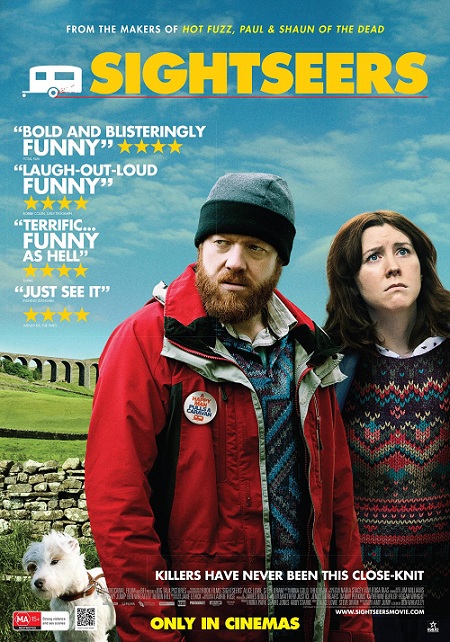
Also having competed at Cannes, but in the Director's Fortnight sidebar, is Ben Wheatley's morbidly hilarious third feature, Sightseers. Like his first two films Down Terrace and Kill List (the latter screening at Indiefest14), grisly criminal behavior is discomfortably raked with savage humor, although this outing finds Wheatley capably directing material written by others. Tina, a sheltered young woman with a spiteful mum, takes off with new boyfriend Chris on an "erotic odyssey" – actually a road trip via mobile home visiting banal Yorkshire tourist spots. After a confrontation with a litterbug unmasks Chris as a volatile psychopath, Tina discovers her own inner assassin and the pair fuck and feud their way across the British countryside. Combining elements of The Honeymoon Killers and Serial Mom, Sightseers is more of an outright comedy than Down Terrace or Kill List, albeit one with plenty to offend genteel sensibilities.

SF Indiefest's 2013 Centerpiece Film is Everardo Valerio Gout's debut feature Days of Grace, a slick thriller that world premiered as a special Cannes midnight screening in 2011. The movie earned 15 Ariel Award nominations (Mexico's Oscar), won eight of them and stretches the boundaries of what might generally be considered "indie." Highly stylized, intricately constructed and steeped in violence and corruption, Days of Grace cross-cuts between three kidnappings which occur during three different World Cups. I found it difficult keeping track of the three threads, (even though different composers, including Nick Cave, are employed for each section), but I'm not always the brightest bulb in the marquee when it comes to navigating complex plotlines. The showy soundtrack utilizes three interpretations of "Summertime" – by Janis Joplin, Nina Simone and Scarlett Johansson – to nice effect.

Paul Bunnell's Greaser sci-fi musical, The Ghastly Love of Johnny X, returns to the Bay Area nearly a year after its 2012 world premiere at San Jose's Cinequest. Despite shortcomings, it's easy to enjoy this ambitious labor of love for the cheesy special effects, clever musical numbers and eye-grabbing B&W cinematography (shot with the very last of Kodak's B&W Plus-X film stock.) And then there's Kevin McCarthy's final screen appearance as the Grand Inquisitor who banishes Johnny X to planet Earth. TGLOJX has the distinction of being the country's lowest grossing film of 2012, earning the pauperly sum of $117.00 during its U.S. theatrcial run. The final narrative feature I previewed was Wrong, Quentin Dupieux's much anticipated follow-up to 2010's "killer tire" spoof, Rubber. As with any gag-filled, absurdist comedy, one's mileage will vary greatly. It was the hangdog charm of actor Jack Plotnick's shell shocked ex-travel agent pursuing his kidnapped pooch that stuck with me at the end.
 Amongst the narrative features I did not get to preview, I'm most anxious to catch Davide Manuli's The Legend of Kaspar Hauser. Vincent Gallo plays two roles in this surreal, B&W Italian "techno-western" which reimagines the classic 19th century foundling story. The festival kicks off with Michel Gondry's latest, The We and the I, which also opened Cannes' Director's Fortnight sidebar last year to mixed reviews. The film follows a group of Brooklyn teenagers (all played by non-pros) as they ride the bus home on the last day of school. The trailer resembles many insufferable weekday afternoons I've spent riding MUNI. Closing Indiefest 2013 will be a new work from prolific Mumblecore pioneer Joe Swanberg (LOL, Hannah Takes the Stairs). All the Light in the Sky stars Jane Adams (Happiness, Hung) and both she and
  Swanberg are expected to be in attendance. (The film reappears at the Roxie as part of a three-day, 12-film Joe Swanberg retrospective from February 22 to 24.) Other narrative features perhaps worth considering include Ghosts with Shit Jobs (a dystopian faux-doc in which six Caucasian slum dwellers find themselves subservient to the Asian new world order), The Last Elvis (about a delusional Argentine Presley impersonator from director Armando Bo, who co-wrote the script for Alejandro González Iñárritu's Biutiful), and Simon Killer, a controversial new film from the gang that produced Martha Marcy May Marlene.


As always, Indiefest digs up a few fabulous repertory titles, which are presented this year in a sidebar titled, House of Psychotic Women. That's also the title of a new book by Kier-la Janisse, described as an "autobiographical exploration of female neurosis in horror and exploitation films." Ms. Janisse will be on hand to introduce screenings of Born Innocent, the legendary 1974 made-for-TV women's prison movie starring Linda Blair (in a rare 16mm print) and an even rarer 35mm print of "unnerving, squirm-inducing" 1972 teen prostitute pic, Toys Are Not For Children.

There aren't many documentaries at Indiefest because the organization presents its own non-fiction showcase, SF DocFest, each autumn. I count five in this line-up, two of which I missed at last month's Palm Springs International Film Festival and was relieved to find here. Leslie Zemeckis' Bound by Flesh tells the astounding tale of conjoined twins Daisy and Violet Hilton, who were among vaudeville's highest paid performers during their between-world-wars heyday. From their 1908 birth to a Brighton barmaid to their 1969 death from Hong Kong flu in a South Carolina trailer park, this sympathetic portrait surveys two truly inseparable lives that survived exploitative guardians, detention at Angel Island, carnival sideshows, appearances in Tod Browning's Freaks and (very) loose biopic Chained For Life (available on YouTube), publicity stunt marriages to gay men, hard-drinking years in burlesque, grinding tours of the drive-in movie circuit and finally, legit work as supermarket produce clerks. Actresses Nancy Allen and Lea Thompson narrate as the Hilton Sisters, while various authorities and distant relatives provide the talking heads. My only complaint is the film's overuse of certain archival materials.

The fest's other highly recommended bio-doc is Jorge Hinojosa' utterly fascinating and insightful Iceberg Slim: Portrait of a Pimp. Executive-produced by rapper Ice-T, it tells the story of Robert Beck, an emotionally wounded university drop-out who at age 50 transformed a lifetime of criminality into a wildly successful writing career under the pen name Iceberg Slim (selling over six million books prior to his death in 1992.) Hinojosa and editor Danny Bresnik engagingly assemble extensive archival materials, poignant animation sequences, pulp fiction artwork and interviews with admirers like Henry Rollins, Leon Kennedy, Snoop Dogg and Quincy Jones. Most importantly, we hear plenty of firsthand testimony from Beck's first wife Betty, the Caucasian speed-typist who encouraged her then roach exterminator husband to dictate his wild tales in their South Central L.A. kitchen.
As I've only touched upon half the feature films which make up SF Indiefest 2013, be sure and check out the rest of the line-up. There are also seven programs of shorts to sample. And don't forget, Indiefest is one Bay Area festival that's known for its parties as well as its film programs, which include a 10th Annual Big Lebowski Party (with mini-bowling, White Russians and 35mm midnight screening), an 80's Power Ballad Sing-a-long Party and a Roller Disco Party.
Cross published on The Evening Class.
2012 Ten Favorite Narrative Features
Beyond the Hills (Romania, dir. Cristian Mungiu)
This would have topped the list even if these films weren't listed alphabetically. A riveting drama about the secular vs. the sacred which is even better than the director's Four Months, Three Weeks, Two Days.
Damsels in Distress (USA, dir. Whit Stillman)
The archly deadpan campus musical-comedy that was loved by a few and loathed by many, but was still the funniest movie I saw in 2012. Mr. Stillman, please don't make us wait another 14 years for a new film.
Facing Mirrors (Iran, dir. Negar Azarbayjani)
Shayesteh Irani (the most fervent female soccer fan in Jafar Panahi's Offside) gave one of the year's great performances in this quietly intelligent and non-didactic drama about a FTM transsexual's friendship with a female taxi driver. This was the discovery of Frameline36, where the post-screening appearance by the film's director and producer nearly brought the house down.
The Giants (Belgium, dir. Bouli Lanners)
Three abandoned teens fall under the sway of a psychotic marijuana farmer and then hit the road in this sweet, unpredictable, heartbreaking, hilarious, and visually arresting survival tale with more than a few nods to The Night of the Hunter. My favorite film at this year's San Francisco International Film Festival.
In the Family (USA, dir. Patrick Wang)
Finally, an American indie film even I can love. Kudos to Mr. Wang for having the audacity and talent to write, direct and star in this nearly three-hour gay child custody drama set in the South without villains or heroes. Your loss if you if you missed one of the film's three swings through the Bay Area in 2012.
Lincoln (USA, dir. Steven Spielberg)
The world didn't come to an end in 2012, but a Spielberg film did make it into my Top Ten. (In all fairness, last year's The Adventures of Tintin was also pretty fabulous). Thanks to Tony Kushner's brilliant script, Daniel Day Lewis' performance of the year, a great supporting cast and composer John Williams turning the schmaltz w-a-y down.
Michael (Austria, dir. Markus Schleinzer)
This is the last film added to my list, and I re-watched it two nights ago to see if it made as strong an impression as when first viewed last January. This debut feature from renowned casting director Schleinzer (the films of Michael Haneke, Michael Glawogger and many others) is a brave, unnerving and methodical study of a bland 30-something office dweeb who keeps a 10-year-old old boy locked up in his basement.
Moonrise Kingdom (USA, dir. Wes Anderson)
The alleged charms of Wes Anderson were completely lost to me until 2009's The Fantastic Mr. Fox. Now once again, he has hit all the right buttons with this New England 1965 coming-of-age charmer. Even better the second time around in 35mm at the Castro Theatre.
Once Upon a Time in Anatolia (Turkey, dir. Nuri Bilge Ceylan)
A slow-burning police procedural-cum-long night's journey into day laced with magnificent character studies, this was the only film on the list I felt compelled to watch three times. While acclaimed as a masterpiece elsewhere, it was dismissed by San Francisco's lead film critic as "colossally, memorably and audaciously boring."
The Turin Horse (Hungary, dir. Béla Tarr)
The end of the world as experienced in a wind-blown, dilapidated farmhouse by a father and daughter subsisting on boiled potatoes. The director has claimed this exercise in hypnotic formalism will be his final work, and really, what could there possibly be left to say. It supplants Damnation as my all-time favorite Tarr film.
2012 Narrative Feature Honor Roll
Amour (Austria/France, dir. Michael Haneke)
Beauty (South Africa, dir. Oliver Hermanus)
A Bottle in the Gaza Sea (France/Israel, dir. Thierry Binisti)
Bullhead (Belgium, dir. Michael R. Roskam)
Chicken with Plums (France/Germany, dir. Vincent Paronnaud, Marjane Satrapi)
The Conquest (France, dir. Xavier Durringer)
Death for Sale (Morocco, dir. Faouzi Bensaïdi)
Django Unchained (USA, dir. Quentin Tarantino)
Donoma (France, dir. Djinn Carrénard)
Dreileben: One Minute of Darkness (Germany, dir. Christoph Hochhausler)
Elite Squad: The Enemy Within (Brazil, dir. José Padilha)
The Girl with the Dragon Tattoo (USA, dir. David Fincher)
Guilty (France/Belgium, dir. Vincent Garenq)
Here and There (USA/Mexico, dir. Antonio Méndez Esparza)
Holy Motors (France, dir. Leos Carax)
In Another Country (South Korea, dir. Hong Sang-soo)
Las Acacias (Argentina, dir. Pablo Giorgelli)
Neighboring Sounds (Brazil, dir. Kleber Mendonça Filho)
Omar Killed Me (France/Morocco, dir. Roschdy Zem)
Oslo, August 31st (Norway, dir. Joachim Trier)
The Other Son (France, dir. Lorraine Levy)
Rebellion (France, dir. Mathieu Kassovitz)
The Salesman (Canada, dir. Sébastien Pilote)
Sister (Switzerland/France, dir. Ursula Meier)
Sleeping Sickness (Germany, dir. Ulrich Köhler)
Smuggler's Songs (France, dir. Rabah Ameur-Zaïmeche)
The Snows of Kilimanjaro (France, dir. Robert Guédiguian)
Tabu (Portugal, dir. Migues Gomes)
The Woman in the Septic Tank (Philippines, dir. Marlon Rivera)
*note – I've yet to see The Master or Zero Dark Thirty.
2012 Ten Favorite Documentary Features
The Ambassador (Denmark, dir. Mads Brugger)
The Central Park Five (USA, dir. Ken Burns, Sarah Burns, David McMahon)
Don't Stop Believin': Everyman's Journey (USA, dir. Ramona S. Diaz)
Give Up Tomorrow (USA, dir. Michael Collins)
Joann Sfar Draws from Memory (USA, dir. Sam Ball)
Marina Abramovic: The Artist is Present (USA, dir. Matthew Akers, Jeff Dupre)
Only the Young (USA, dir. Elizabeth Mims, Jason Tippet)
Under African Skies (USA/South Africa, dir. Joe Berlinger)
Vito (USA, dir. Jeffrey Schwarz)
The Waiting Room (USA, dir. Peter Nicks)
2012 Documentary Feature Honor Roll
Ai Weiwei: Never Sorry (USA, dir. Alison Klayman)
Ben Lee: Catch My Disease (Australia, dir. Amiel Courtin-Wilson)
Benda Bilili! (Congo/France, dir. Renaud Barret, Florent de la Tullaye)
Caesar Must Die (Italy, dir. Paolo Taviani, Vittorio Taviani)
Call Me Kuchu (USA/Uganda, dir. Katherine Fairfax Wright, Malika Zouhali-Worrall)
Crossfire Hurricane (UK/USA, dir. Brett Morgen)
Ethel (USA, dir. Rory Kennedy)
Golden Slumbers (France/Cambodia, dir. Davy Chou)
The Sheik and I (USA/United Arab Emirates, dir. Caveh Zahedi)
Whore's Glory (Germany/Austria, dir. Michael Glawogger)
*note – I've yet to see Searching for Sugarman or How to Survive a Plague
2012 Favorite Repertory/Revivals Screenings
Yellow Submarine (1968, UK/USA, dir. George Dunning, Castro Theatre)
As best as I can remember, this new restoration is the only film on the list that was projected digitally. And as much as I hate to admit it, was all the better for it. A trippy, eye-popping joyride.
Napoleon (1927, France, dir. Abel Gance, Paramount Theatre)
Kevin Brownlow's restoration of this silent classic presented by the San Francisco Silent Film Festival was, of course, the repertory event of the year. While I can't say I was enraptured by all 330 minutes, Part I (Napoleon's childhood) and the grand three-screen finale were more thrilling than anything else I watched all year.
American Graffiti (1973, USA, dir. George Lucas, Pacific Film Archive)
I hadn't seen this in over 30 years and it held up shockingly well. The screening featured a conversation with costume designer Aggie Guerard Rodgers, for whom this was a first film. Rodgers shared dozens of anecdotes, my favorite being the great lengths taken to keep Richard Dreyfuss' sweat from bleeding his madras shirt, all in the service of continuity.
Quadrophenia (1979, UK, dir. Franc Roddam, Castro Theatre)
The experience of seeing this San Francisco International Film Festival late-show presentation of The Who's second filmed rock opera began while waiting in line, with two dozen motor-scooters with costumed riders pulling up in front of the Castro Theatre. During the screening, drunk and unruly wanna-be Mods and Rockers cheered and hurled insults at each, while others sang along to The Who's anthems. The new, pristine 35mm print was being projected for only the third time, and the highlight, as it was when I first saw the film 33 years ago, was Sting's nearly wordless, uber-cool performance as the king of the Mods.
Underworld USA (1961, USA, dir Sam Fuller, Castro Theatre)
I was lucky enough to catch all but one of the 26 flicks on offer at 2012's Noir City. Most were pretty darn fabulous, but this gritty revenge tale starring Cliff Robertson managed to stand out. Other highlights included the inane slapstick of Frank Tashlin-scripted The Good Humor Man, the slatternly haughtiness of Beverly Michaels in Pickup and the Angie Dickinson double bill of The Killers and Point Blank (with Dickinson herself on-stage in conversation with Eddie Muller).
Animal Crackers (1930, USA, dir. Victor Heerman, Castro Theatre)
Monkey Business (1931, USA, dir. Norman Z. McLeod, Castro Theatre)
Horse Feathers (1932, USA, dir. Norman Z. McLeod, Castro Theatre)
There were plenty of terrific revivals going on at the Castro outside the realm of 2012's film festivals, including this revelatory triple bill of the Marx Brothers' second, third and fourth features – and all for the price of one movie. Another memorable 3-way for the budget conscious was a Saturday marathon of Wong Kar-wai's Days of Being Wild, In the Mood for Love and 2046.
Possession (1981, France/West Germany, dir. Andrzej Zulawski, Castro Theatre)
The Tenant (1976, France, dir. Roman Polanski, Castro Theatre)
More love for the Castro Theatre, this time for their inspired double bills, and in particular this Isabelle Adjani creep-fest with gorgeous 35mm prints which looked like they'd been struck yesterday. I was also thrilled to partake in 2012 double bills of Kill Bill: Vol. 1 and 2, and Boogie Nights with Pulp Fiction.
The Cheat (1931, USA, dir. George Abbott, Roxie Theater)
As a Tallulah Bankhead obsessive, this was of course my favorite of the eight films I caught during programmer Elliot Lavine's springtime pre-code series, "Hollywood Before the Code: Nasty-Ass Films For a Nasty-Ass World." Another highlight was finally getting to see the "Sweet Marijuana" production number from Mitchell Leisen's très risqué 1934 flick, Murder at the Vanities, complete with bare-breasted chorines posing as singing cactus flowers.
Come Back Africa (1959, USA, dir. Lionel Rogosin, Roxie Theater)
Seeing and hearing Miriam Makeba sing two songs in an intimate living-room setting was the high point of this film about one black man's struggles in apartheid-era South Africa. The screening I attended was followed by a live performance by the Vukani Mawethu Choir, who sang a selection of South African freedom songs. Talk about your value-added in-cinema experience! Other memorable 2012 revivals at the Roxie include Shirley Clarke's The Connection and 60's live-concert movie, The Big T.N.T. Show.
The Docks of New York (1928, USA, dir. Josef Von Sternberg, Castro Theatre)
Last, but certainly not least was this utterly exquisite love story set in a shabby waterfront saloon, my favorite of the 15 programs I saw at this year's better-than-ever San Francisco Silent Film Festival. There wasn't a single dud in this year's line-up, although I regret having to miss the Alloy Orchestra accompany The Overcoat, due to the REALLY late start time of the festival's Centerpiece Film, Pandora's Box. Other standouts included my first exposure to Pola Negri in The Spanish Dancer, the beautiful heartbreak of The Wonderful Lie of Nina Petrovna, the dashing antics of Douglas Fairbanks in The Mark of Zorro and of course, Buster Keaton in the closing night film, The Cameraman.