Tuesday, March 22, 2011

SFIFF54 2011 Early Announcements


While the full line-up for the 54th San Francisco International Film Festival (SFIFF) won't be made public until next Tuesday, the press releases announcing this year's awards, special events and competition films have been filling my inbox since the first of the month. Judging from these anticipatory peeks, I think it's safe to say they've assembled yet another winning event – one befitting SFIFF's stature as the longest-running film festival in the Americas.

Of course, SF Film Society Members get a gander at the entire line-up five days early. Look for an email on Thursday with a link to a PDF file of the mini-guide and remember that we're sworn to secrecy until Tuesday morning's press conference. Until then, here's an overview of what we know thus far. Most of the hyperlinks below lead to press releases for each event.


● The festival opens at the Castro Theater on Thursday, April 21with a film I'm very keen on seeing. Beginners is director Mike Mills' highly anticipated follow-up to Thumbsucker, which was one of my ten favorite films of 2005. Ewan McGregor stars as an emotionally floundering man whose 75-year-old father (Christopher Plummer) has come out of the closet. Mélanie Laurent and Goran Visnjic co-star as McGregor's and Plummer's respective love interests. Mills and McGregor are expected to attend the screening and participate in a Q&A, which will be followed by an Opening Night party at the Terra Gallery on Rincon Hill. I wonder if The Future, the new film by Mills' wife Miranda July, will also be part of this year's line-up?


● SFIFF54 closes two weeks later with On Tour, for which actor Mathieu Amalric (The Diving Bell and the Butterfly, Quantum of Solace) won the Best Director prize at last year's Cannes Film Festival (the film also took the FIPRESCI prize in the main competition). Amalric directs his own performance as a worn-out manager who takes a bevy of American neo-burlesque dancers on a tour of provincial France. As best I can tell, the film doesn't have U.S. distribution so this could be the Bay Area's only chance to catch it on a big screen. It's expected that several of the film's burlesque performers will be at the Castro Theater that evening, and afterward the party will move to The Factory nightclub at 525 Harrison Street on Rincon Hill. I'd like to personally thank the festival for putting both Opening and Closing Night parties just two blocks from my home!


● For a number of years, the SFIFF has presented a classic silent film at the Castro Theater, with a contemporary music artist performing a newly composed score. With Tindersticks: Claire Denis Film Scores 1996–2009, this formula gets a slight twist. British band The Tindersticks will accompany a 70-minute montage of scenes from six Claire Denis films for which lead singer Stuart Staples and his band wrote and performed the original music. With their sound augmented by live strings and brass, the group will play alongside clips from Nénette et Boni, Trouble Every Day, Friday Night, The Intruder, 35 Shots of Rum and White Material, all of which have been stripped of their score. San Francisco is one of only six lucky cities to host this sure-to-be magnificent audiovisual experience. (The others are London, Istanbul, Los Angeles, Paris (in Église St. Eustache, no less) and Umea, Sweden.


● Eleven films will compete for this year's $15,000 New Directors Prize, "given to a narrative first feature that exhibits a unique artistic sensibility." In looking over the titles, I was surprised and a bit discomfited that only one film rang any bells. That would be Russian director Sergei Loznitsa's My Joy, which walked away from last year's Cannes with the distinction of being the most disturbing and transgressive film in the main competition (as well as the only one by a first-time feature director). Needless to say, I'm dying to see it. On the same day that the New Directors line-up was announced, the festival also revealed the 12 official selections for the $20,000 prize Golden Gate Awards Documentary Feature Competition. Here I found two films previously on my radar. Eva Mulvad's The Good Life profiles a formerly wealthy Danish mother and daughter now living on the skids in Lisbon, Portugal, and it's been favorably compared to Grey Gardens. In the other film, one man's dubious transition from bloodthirsty Liberian warlord to Pentecostal preacher becomes the subject of Daniele Anastasion and Eric Strauss' The Redemption of General Butt Naked.


● Since 1988, the festival has been presenting its Mel Novikoff Award to "an individual or institution whose work has enhanced the filmgoing public's knowledge and appreciation of world cinema." This year's honoree is none other than collector, preservationist, exhibitor, programmer and consummate showman Serge Bromberg, who is no stranger to Bay Area audiences. I believe his most recent appearance was at the 2007 SF Silent Film Festival and his last visit to the SFIFF was in 2001 with his delightful Treasures from a Chest presentation. (He also co-directed my favorite documentary of 2010, Henri-Georges Clouzot's Inferno, which the fest screened last year.) After receiving his award, Bromberg will once again thrill a Castro Theater crowd – this time with his collection of stereoscopic films in a timely program titled, "Retour de Flamme: Rare and Restored Films in 3-D." Among the highlights will be the Lumière Brothers' Arrival of a Train (not the 1896 original, but a 1936 remake in 3-D!) and Chuck Jones' Lumber Jack-Rabbit (the only one of Warner Bros. Looney Tunes made in 3-D).


● This year's State of Cinema Address will be delivered by producer Christine Vachon, who will speak on "the current state of independent film and the role of producers of provocative cinema going forward." Vachon has produced 60-some films her 25-year career, including works by John Waters, Todd Solondz, John Cameron Mitchell, Larry Clark, Kimberly Peirce and perhaps most notably, Todd Haynes' entire oeuvre, from 1991's Poison right up to his current HBO mini-series adaptation of Mildred Pierce. As SF Film Society's Director of Programming Rachel Rosen states, "She is someone who is in an ideal position to tell us how the business has changed and where she sees it going in the future."


● At the 1976 Academy Awards ceremony, Frank Pierson wasn't on hand to pick up his Best Original Screenplay Oscar® for Dog Day Afternoon (Gore Vidal accepted it on his behalf). Just where he was on that momentous evening might be a good question to ask when Pierson accepts this year's SFIFF Kanbar Award for excellence in screenwriting. Following an on-stage interview about his 50 years in the business – years that included two other Oscar®-nominated screenplays for Cat Ballou and Cool Hand Luke, plus writing and directing (gulp) the Barbra Streisand remake of A Star is Born – the festival will screen Sidney Lumet's gripping tale of a bank robbery gone wrong starring Al Pacino and John Cazale. Pierson will also conduct a master class on the craft of screenwriting.


● Thanks to Gucci and Martin Scorsese's Film Foundation, the SFIFF will screen the recent 4K digital restoration of Federico Fellini's 1960 wide-screen classic, La Dolce Vita at the Castro. I haven't seen it in well over 20 years, missing three recent opportunities at the Pacific Film Archive in 2008-2009. Due to the high volume of must-see new films at the fest, I tend to stay away from its revival/repertory offerings. But an exception probably needs to be made here.


● The festival's Persistence of Vision Award for 2011 goes to multimedia artist Mathew Barney, best known for his five-part Cremaster film cycle. At the award ceremony, Barney will be interviewed by Bay Area writer, curator and critic Glen Helfand, which will be followed by the North American premiere of Drawing Restraint 17. The film is the latest installment of Barney's Drawing Restraint series, "which merges sculpture, athleticism, and cryptic symbolism into a stunning meditation of artmaking and physical exertion."


● Finally, while it hasn't been "officially" announced, anyone who's scrutinized the Pacific Film Archive calendar for March/April knows that venerated Chilean documentarian Patricio Guzmán (Chile, Obstinate Memory, Salvador Allende) will be in town during the festival with his new film, Nostalgia for the Light. Since its Cannes premiere, the film has received unanimous acclaim on the festival circuit and also won the European Film Award for Best Documentary. Guzmán's new work is set in Chile's Atacama Desert, where astronomers search the sky and grieving families search the earth for the remains of loved ones murdered during Augusto Pinochet's dictatorship. A PFA retrospective from April 2 to 28 will feature five other Guzmán films, including the three-part The Battle of Chile. Amazingly – at least for a documentary from Chile – Nostalgia for the Light will have a local theatrical release beginning May 13.


* * * * * * *

For whatever reason, the optimist and masochist in me feels compelled to draw up a festival wish list each year. The 20 films below were culled from a larger, 100-film list, from which I've eliminated anything with impending theatrical release or LGBT content (Frameline will reliably program most of those). I've also left out stuff from 2011's Sundance/Rotterdam/Berlin triumvirate, although I'd sure be impressed to see something like Berlin Golden Bear winner
Nader and Simin, a Seperation or Bela Tarr's The Turin Horse turn up.

This year's SF International Asian American Film Festival uncharacteristically ignored 2010's crop of Asian auteur films, so I'm counting on the SFIFF to fill in that gap. I'm also hoping they've programmed films from last year's second coming of the Romanian New Wave – films that were oddly absent from Toronto (which I didn't attend) and Palm Springs (which I did). Speaking of Palm Springs, here are a dozen terrific movies I saw at that festival which I hope the Bay Area gets to experience as well:
The Albanian, Cirkus Columbia, Essential Killing, The Four Times, Honey, Life Above All, Nothing's All Bad, October, A Screaming Man, Silent Souls and Sound of Noise. Now without further ado – my wish list for SFIFF54:

13 Assassins (Japan dir. Takashi Miike)
Attenberg (Greece dir. Athina Rachel Tsangari)
Aurora (Romania dir. Cristi Puiu)
The Autobiography of Nicolas Ceausescu (Romania dir. Andrei Ujica)
Black Venus (France dir. Abdellatif Kechiche)
Brother and Sister (Argentina dir. Daniel Burman)
Caterpillar (Japan dir. Kôji Wakamatsu)
The Clink of Ice (France dir. Bertrand Blier)
Leap Year (Mexico dir. Michael Rowe)
Mysteries of Lisbon (Portugal dir. Raoul Ruiz)
The Names of Love (France dir. Michel Leclerc)
Neds (UK dir. Peter Mullan)
Old Cats (Chile dirs. Pedro Peirano, Sebastián Silva)
On the Path (Bosnia/Herzegovina dir. Jasmila Zbanic)
Pál Adrienn (Hungary dir. Ágnes Kocsis)
Post Mortem (Chile dir. Pablo Larraín)
The Sleeping Beauty (France dir. Catherine Breillat)
The Tree (France dir. Julie Bertucelli)
Tuesday, After Christmas (Romania dir. Radu Muntean)
Viva Riva! (Congo dir. Djo Munga)


Cross published on The Evening Class and Twitch.

Wednesday, March 9, 2011

SFIAAFF 2011 - Preview Capsules


The 29th edition of the San Francisco International Asian American Film Festival (SFIAAFF) begins this Thursday, March 10 and runs through March 20 at various Bay Area venues. In a previous post I gave an overview of this year's extensive line-up. The following are capsule reviews of six narrative features and four documentaries I've had the opportunity to preview on DVD screener.


Anna May Wong: In Her Own Words (USA/South Korea dir. Yunah Hong)
Those who attended SFIAAFF's 2004 Anna May Wong retrospective won't want to miss this seamlessly constructed documentary that covers all aspects of the star's career and personal life. Deftly blending quotes from letters and interviews, along with choice photos, clips and interviews with those who knew her (including renowned cinematographer Jack Cardiff), director Hong renders a clear sense of just who this legendary Chinese-American actress was – beyond the exotic stereotype she seldom escaped on-screen. Among its many revelations is that lyricist Eric Maschwitz wrote "These Foolish Things (Remind Me of You)" especially for his lover, Anna May. What doesn't quite work are the film's reenactments with actress Doan Ly, especially the attempted recreation of Wong's cabaret act.


Bi, Don't Be Afraid! (Viet Nam/France/Germany dir. Phan Dang Di)
In this sumptuously photographed family drama, a boy maneuvers his way around a world of troubled adult relatives. Five-year-old Bi's grandfather has returned to Hanoi to die, while his absent alcoholic father cavorts with a masseuse. Putting up with it all is his empathetic mother. Bi's young schoolteacher aunt is pursued by a hunky construction worker, but she's developed the hots for one of her students. The film is leisurely paced to a fault, with peculiar editing choices that fail to unite disparate plot threads. There's also an overheated eroticism that verges on creepy. And I never thought I'd ever say this about any film, but the ample male nudity here is fairly gratuitous. Still,
Bi is worth a look for its urban mise-en-scène (particularly that of an ice factory where Bi spends much of his time), uniformly fine performances and the stunning, aforementioned Red One cinematography.


Dance Town (South Korea dir. Jeon Kyu-hwan)
A female escapee from North Korea adjusts to life in the South in director Jeon's third and final installment of his "urban loneliness" trilogy. The film is strongest in its first half, as Jung-rim tentatively stakes out a new existence, prodded by a well-meaning caseworker and some overbearing churchgoers. It all gets a bit overreaching and
Crash-y, however, with storylines focused on characters in equally desperate straits. By the end, Dance Town seems to enjoy wallowing in its own miserablism, almost to the point – I hate to say it – of being laughable.


Dog Sweat (Iran/USA dir. Hossein Keshavarz)
Most of Iran's population is under 30-years-old and living amidst an authoritative, fundamentalist society. How they reconcile youthful desire for personal freedom in the face of such strictures is the theme of this modest, clandestinely-shot indie. The film juggles a number of potentially interesting, inter-connected storylines, but tends to lurch gracelessly between them. There's also a lack of depth in the characterizations, which holds particularly true in the depiction of a gay man and aspiring female pop singer who are joined in an arranged marriage. First we see their initial meeting amongst family members, followed by a scene of their wedding, and then a shot of them at home watching TV – all without a single word of dialogue in which they discuss their mutual predicament. Still,
Dog Sweat has value in that it depicts a side of Iran we rarely see. Just don't go in expecting the level of artistry seen in youth-oriented films like Bahman Ghobadi's No One Knows About Persian Cats, Jafar Panahi's Offside or even last year's SFIAAFF shot-on-a-cellphone documentary, Sepideh Farsi's Tehran Without Permission.


The Imperialists Are Still Alive! (USA dir. Zeina Durra)
In this impressive directorial debut, we witness post-9/11 New York City through the eyes of its young "émigré intelligentsia." Theirs is an enviable life of limos, swag bags, galleries and underground clubs – but if you're young and Arab, it's also a life of disquiet and paranoia. French actress Élodie Bouchez (
Wild Reeds, The Dreamlife of Angels) portrays a politically provocative artist of Bosnian-Lebanese-Jordanian descent, who in the opening scene is being photographed with nothing but keffiyeh wrapped around her head. One eventful night she learns that a friend has probably been abducted by the C.I.A., and she meets a handsome Mexican PhD student. The film follows the course of their burgeoning relationship amidst this life of privilege. Director Durra obviously knows this life well and her film is full of delicious rib-poking that avoids full-on lampooning of her bourgeois characters. These are real people with valid concerns – Bouchez's character spends much of the film fretting about a brother who's trying to escape the Israeli bombing of Beirut. Durra's screenplay has also devised interesting ways for her characters to interact with NYC's immigrant economic substrata of manicurists, maids and taxi drivers. Poignant, charming, politically aware – and shot in gorgeous 16mm depicting a wintry Manhattan – this is one of my favorite films of the year thus far.


Living in Seduced Circumstances (USA dir. Ian Gamazon)
The co-director of 2005's urgent Philippines kidnapping drama
Cavite returns with this curious two-hander tale of revenge and torture. At a remote forest cabin, a demented pregnant woman torments an older man she's duct-taped to a wheelchair. Fancying herself "Princess of the Jungle," she shoots him with arrows, smacks him with a shovel and sticks his feet in a wood-burning stove. A motive for all this aggression is given early on, but another one arises that relates to the two characters being Vietnamese. Color camera filters and animation give the film a dreamlike quality, and Quynn Ton tears into her role with a terrifying, childlike malevolence. Overlong at 76 minutes, this would have made for one awesome short.


Passion (Mongolia dir. Byamba Sakhya)
In its communist era heyday, Mongolia produced seven features and 40 documentary films per year, but today the Mongolian Studio complex lies in near ruin. Jigjid Dejid was considered the country's greatest director, and now his son Binder struggles to carry on the tradition. When he discovers that his latest film can't be screened in Ulan Bator's only cinema because of format and aspect ratio issues, he takes it on the road. Unfortunately,
Human Traffic, his cautionary tale about a rich city woman who sells her rural sister's kidney, inspires few ticket sales, even in the provinces. Joining this dispiriting 2,000 km journey is Binder's longtime cinematographer, Passion's director/narrator/DP Byamba Sakhya. Their close friendship renders this an extremely personal film, perhaps a bit too much so. But those with an interest in national cinemas, or for that matter, an overall concern for the future of film exhibition everywhere, will find much to appreciate. Highlights include Sakhya's staggeringly beautiful photography of Mongolia's towns and villages, along with a trove of fascinating clips from the country's cinematic legacy.


Piano in a Factory (China dir. Zhang Meng)
Chen Guilen plays accordion in a band and is in a fluctuating relationship with its comely lead singer. He's also in a custody battle with his soon-to-be nouveau riche ex-wife. To win the affections of his daughter, he launches a monumental scheme to build her a piano with help from his scrappy friends and bandmates. This is the framework upon which writer/director Zhang hangs this delightfully loopy film, which is quite unlike any Chinese movie I've ever seen. Zhang has a sublime visual sense, utilizing interior and exterior spaces for utmost effect in his compositions and camera movements. This is also a musical of sorts, with several production numbers and a soundtrack that encompasses everything from Russian pop songs to the theme from Super Mario Bros. One could complain that
Piano in a Factory is a bit precious and overworked, but that criticism is easily overshadowed by the film's enormous ambitions and sense of fun.


Summer Pasture (USA/Tibet dir. Lynn True, Nelson Walker)
Yama and Locho are married Tibetan yak-herders whose way of life is fading as fellow nomads choose life in the city. This extraordinary documentary observes them through the course of one summer, giving us a rich portrait of both their quotidian lives and individual personalities. Wife Yama suffers from heart disease, yet rises at 4 a.m. to gather yak dung for fuel, with the rest of her day spent making butter and caring for their baby daughter. Husband Locho, a ladies man in his younger days and still rather vain, grazes the family herd. He has an illegitimate child by another woman, which counts against the three-child maximum he's allowed by the Chinese government (and the woman in question had to be paid off in caterpillar fungus, which is the region's new cash crop). One revealing sequence cuts back and forth as Yama and Locho, filmed separately, recount the incident. This is yet another SFIAAFF 2011 documentary with eye-catching cinematography, with yak silhouettes against a dawn sky and the arrival of a hailstorm among the high points. In the end credits I noticed that Philip Maysles – son of acclaimed documentarian Albert Maysles – was one of the cameramen, and the Maysles Institute itself is listed as one of the funders.


Tales of the Waria (Indonesia dir. Kathy Huang)
This fine documentary brings us four touching, humanist portraits of transgenders living in Makassar on the southern tip of Indonesia's Sulawesi island. Waria is a combination of the words
wanita (woman) and pria (man), and their existence in this Muslim society is tolerated because in pre-Muslim times they were trusted caretakers of the king. None desire sex-change operations, believing that they were created as men and must ultimately return to God as men. (This is in contrast to Iran, where the government pays for the operation, believing that transexualism is okay because nothing in the Quran forbids it). The most compelling story is that of Mama Ria, a waria in her fifties who has been a policeman's second wife for 18 years. One memorable scene shows her strolling arm in arm with the first wife during a family outing at a water park. Over the course of the film, however, we sadly watch her marriage come to an end, despite recent plastic surgery to improve her looks. The other warias are Suharni, a hairdresser who leaves her boyfriend to earn money in Bali; Agus, a husband and father who struggles with the desire to return to the waria way of life; and Tiara, an exuberant showgirl and beauty pageant trainer.

Cross published on The Evening Class and Twitch.


Sunday, February 27, 2011

SFIAAFF 2011 - A Look at the Line-Up


Rather than wait until its 30th birthday, the San Francisco International Asian American Film Festival (SFIAAFF) has chosen 29 as the ripe age for a makeover. At a recent press conference announcing 2011’s line-up, the fest introduced a new logo, website, tagline (“Stories to light") and most importantly, a new Festival and Exhibitions Director. Masashi Niwano, a 29-year-old Bay Area native, worked his way up the SFIAAFF ranks as volunteer, intern, theater operations manager and even filmmaker. He's come home after a four-year stint running the Austin Asian American Film Festival and now replaces esteemed Chi-hui Yang in helming the largest Asian fest in North America.


SFIAAFF has also replaced its traditional magazine-format program guide with a classy (but somewhat unwieldy and eye-straining) 6" X 9" catalog. Flipping through it at the press conference, I noted an absence of recognizable international auteurs – indeed, only two of the roughly dozen films I’d hoped for were in the program. Among the M.I.A. are new works by Lee Chang-dong, Tsui Hark, Takashi Miike, Kôji Wakamatsu, Anh Hung Tran, Amir Muhammad, Kim Longinotto and most strangely, SFIAAFF habitué Hong Sang-soo, who released two new films last year. Of course, SFIAAF is more than just a greatest hits collection from the previous year’s fest circuit. A closer examination would reveal many programs worthy of anticipation.


My two wish-list fulfillments are Jia Zheng-ke’s I Wish I Knew and Zeina Durra’s The Imperialists Are Still Alive! Considered China’s most important filmmaker by some, this new work from Jia (Still Life and last year’s SFIAAFF entry, 24 City) is a portrait of Shanghai, shot by his extraordinary, longtime cinematographer Yu Likwai. Imperialists is director Durra’s narrative feature debut and is set amongst NYC’s post-9/11 “émigré intelligentsia." The main character is a bourgeois but politically provocative artist who falls for a Mexican PhD student on the same night she learns that a friend has possibly been abducted under the C.I.A.’s “extraordinary rendition" program. The part is played by one of my favorite French actresses, Élodie Bouchez (André Téchiné’s Wild Reeds and Roman Coppola’s CQ.) It remains to be seen how the film fits the context of an Asian American film festival, given that the director – as well as Bouchez’s character – is of Bosnian-Jordanian-Palestinian descent. Also worth noting is that Imperialists was shot in 16mm and will be screened at the festival in that format. (Speaking of screening formats, you’ll need to purchase the catalog to learn what’s what – the free mini-guide and website make no mention of them).


This year’s SFIAAFF runs from March 10 to 20 and I’ve got a big, red circle drawn around Sunday, March 13. I plan on parking myself at the Castro Theater from noon till midnight that day for what promises to be one helluva quadruple-bill. The marathon kicks off with what was originally a distributor-imposed “surprise" screening. Said distributor has changed its mind, however, and now I’m free to tell you that the surprise is Lee Jeong-beom’s violent revenge thriller The Man From Nowhere, one of South Korea’s biggest 2010 box office hits. Actor Bin Won stars as a taciturn pawnshop owner who’s forced to revive his skills as a former government assassin in order to rescue the daughter of his junkie upstairs neighbor from child organ harvesters. Whew! Reviews say the film’s occasional hoary genre clichés are outweighed by kick-ass set pieces and a riveting performance by Won, in a role that’s polar opposite to the developmentally disabled son he portrayed in Bong Joon-ho’s Mother.


The Castro mood shifts radically at 3:00 with Chito S. Roño’s Emir, a campy, 22-song Filipino musical about an OFW (overseas Filipina worker) who becomes nanny to a young Middle Eastern prince. In his review for Variety, Jay Weissberg calls Emir “jaw-dropping in both good ways and bad," which is recommendation enough for me. The Castro’s evening programming begins at 6:30 with SFIAAFF’s 2011 Centerpiece Film, Le Thanh Son’s Clash. This martial arts epic was last year’s top box-office smash in Viet Nam and stars that country’s very own “Brangelina," couple Johnny Tri Nguyen and Ngo Thanh Van. The trailer is a blast and friends who attended the press screening say it’s sexy as all get out. Plus, Nguyen and Van are expected to appear live on-stage at the Castro. How do you top that? Perhaps with Raavanan, the latest spectacle from celebrated Indian director Mani Ratnam (Dil Se, A Peck on the Cheek), which screens at 9:30. This contempo retelling of a tale from the Ramayana stars mono-monikered hunk Vikram as a criminal who conducts a revenge kidnapping of a police chief’s wife (Aishwarya Rai). By the way, all four films at SFIAAFF’s day-at-the-Castro will be screened in 35mm.


Each year the festival presents a “ripe for rediscovery" movie from Out of the Vaults – traditionally at the Castro Theater. Unfortunately, this year’s selection unspools at Berkeley’s Pacific Film Archive at the exact same time as the Castro’s Centerpiece Film. I’m probably not the only person who’s distressed over having to choose. This year's revival will be 1936’s Charlie Chan at the Olympics, said to be “one of the best and most interesting of the 16 films in which Warner Oland played the title character." The event will include a conversation between Stephen Gong, executive director of the Center for Asian American Media (CAAM) and author Yunte Huang, who’s just written the book, “Charlie Chan: The Untold Story of the Honorable Detective and His Rendezvous with American History."


Several of the films mentioned thus far hail from the festival’s new Cinema Asia sidebar, which is basically their old International Showcase with some foreign documentaries mixed in. Of the 15 selections on offer, I’m especially looking forward to Dooman River, the latest narrative feature about North Koreans in China from director Zhang Lu. His masterful Grain in Ear and its follow-up, Desert Dream, were shown at the festival in 2006 and 2008 respectively. I’ve also read good things about Jeon Kyu-Hwan’s Dance Town, which follows an exiled North Korean table tennis champ as she adapts to life in South Korea. Those who follow the Golden Horse Awards – arguably Asia’s most prestigious film accolade – will have the opportunity to catch two big winners from last year. Chang Tso-Chi’s When Love Comes won Best Feature Film, Audience Choice Award, Best Cinematography and Best Art Direction, while Chung Mong-Hong’s The Fourth Portrait took home prizes for Best Director and Outstanding Taiwanese Film. SFIAAFF’s Asian scope extends all the way to Iran, and I’ve heard nothing but raves for Homayoun Asadian’s Gold and Copper from friends who’ve seen it at other festivals. Praised for how it “illuminates the pressures and pitfalls of traditional roles in Iranian society," the film tells the story of a young mullah-in-training who must assume household and parental duties when his breadwinner wife falls ill to multiple sclerosis. A few other Cinema Asia possibilities include Bi, Don't Be Afraid!, which was Viet Nam’s Oscar submission, and Passion, a documentary about the legacy of filmmaking in Mongolia.


Eight documentary and eight narrative features will compete in this year’s Competition Awards. I’ve never been clear about the criteria for these awards, but it seems that the filmmaker must be North America-based, while the subject matter or setting can be anywhere in the world. In addition to the previously mentioned The Imperialists are Still Alive!, I’m most looking forward to Eyad Zahra’s The Taqwacores, based on the provocative 2003 novel about an imaginary Muslim-American punk scene. Two directors familiar to SFIAAFF audiences return with new projects in competition. From Ian Gamazon (Cavite) comes Living in Seduced Circumstances, a tale of vengeance and torture that “traverses an imaginary border toward the darkened realm of fairy tale." And director Stephane Gauger (Owl and the Sparrow) returns to the streets of Saigon for a look at underground Vietnamese hip-hop youth culture (Saigon Electric). The only narrative feature of significant LGBT interest in the festival is Hossein Keshavarz’s Dog Sweat, a clandestinely filmed, multi-character weaving about young people in Iran that includes a gay couple facing the threat of an arranged marriage. Bertha Bay-sa Pan’s romantic comedy Almost Perfect is notable for the appearance of Edison Chen – his first film, I believe, since 2008’s XXX-photo scandal made him an industry pariah. Rounding out this year’s narrative competition are Jy-ah Min’s M/F Remix, which “repurposes" Godard’s Masculine/Feminine for a new generation, and Chuck Mitsui’s One Kine Day, a skater dude’s day-in-the-life saga that’s steeped in Oahu working class youth culture.


Shifting over to the Documentary Competition, I’ve got an eye on Lynn True and Nelson Walker’s critically acclaimed Summer Pasture, a strictly observational doc about a married yak-herding couple being confronted with modernity. News junkies might remember a 2004 item about a Hmong immigrant who killed six white hunters in a Wisconsin forest. Mark Tang and Lu Lippold’s Open Season investigates that tragic story. The resurging interest in the life and career of actress Anna May Wong gets furthered with Yunah Hong’s Anna May Wong: In Her Own Words. The only LGBT doc in the festival, Kathy Huang’s Tales of the Waria, looks into the world of four Indonesian transgenders. Other competition documentaries explore such topics as India’s booming trade in “procreative tourism," i.e. Indian women being paid to act as birth surrogates for Western couples (Made in India), a traditional Hawaiian song competition for students (One Voice) and the deportation of U.S. Cambodian refugees with criminal records to a motherland they no longer know (Resident Aliens).


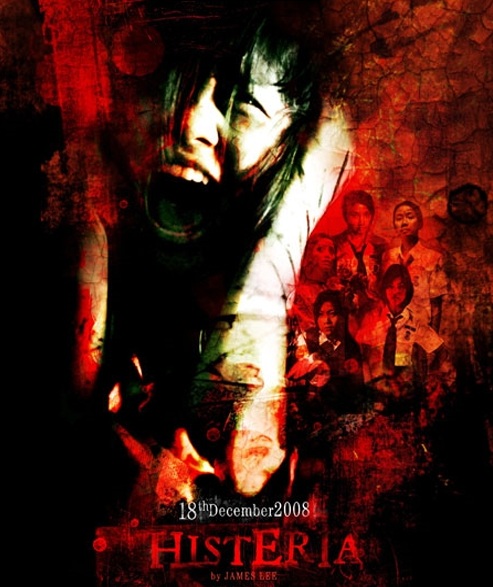
After Masashi Niwano was named Exec Director of the fest, one of his first missions was to curate a horror series for this year. The result is a fun-sounding trio of terror tales called "After Death: Horror Cinema from Southeast Asia." His picks include Thai blockbuster Nang Nak, which was first shown at the festival in 2000; Histeria, from Malaysian indie director James Lee (The Beautiful Washing Machine) which features that country's first on-screen lesbian kiss, and Affliction from the Philippines.


What else? The SFIAAFF 2011 opening night film is Andy de Emmony's West is West, a sequel to the popular 1999 British comedy East is East. This new adventure follows the multi-ethnic Khan family from Manchester to rural Pakistan, with returning cast members Om Puri, Linda Bassett and Jimi Mistry. (The film was also the sold-out opening nighter at our recent Mostly British Film Festival). After the screening at the Castro, SFIAAFF opening night continues with a party at the SF Asian Art Museum. Closing night's feature is Surrogate Valentine by Dave Boyle (White on Rice), a rock-mockumentary starring local indie singer/songwriter Goh Nakamura. This year also shines a spotlight on director Gurinder Chadha, who will sort of be on hand to introduce her new macabre comedy It's a Wonderful Afterlife – via Skype. Chadha's spotlight also includes revival screenings of her 2002 mega-hit, Bend It Like Beckham. And finally, this year's festival delivers a whopping nine programs of shorts.


In his opening remarks at the press conference, CAAM's Stephen Gong declared 2011's SFIAAFF “the most ambitious festival in our 29-year history." Nowhere is that more evident than in the New Directions section, which includes seven panel discussions (Directions in Dialogue), a night of cutting edge contemporary music at the 111 Minna Street club (Directions in Sound) and the festival's largest event, the all day/all night Festival Forum on Saturday, March 12. This year's forum features live music, spoken word, dance troupes and a Bollywood Under the Stars outdoor screening. Also, as part of Directions in Digital Media, be sure to check out Pixels, Politics and Play, CAAM's first ever independent games exhibition which will happen March 11 to 13 at SUPERFROG Gallery (located in the New People building on Post Street). As someone who couldn't care less about electronic games, whether it's Grand Theft Auto or iPhone Scrabble, I look forward to playing The Cat and the Coup. In this game designed by Peter Brinson and Kurosh ValaNejad, the player becomes the cat of Dr. Mohammed Mossadegh, Iran's first democratically elected Prime Minister who was deposed in a C.I.A.-engineered 1953 coup. Here's the trailer for it:

The Cat and the Coup - Trailer from Peter Brinson on Vimeo.


Cross published on The Evening Class and Twitch.


Thursday, February 10, 2011

SF Silent Film Festival – Winter Event 2011


The world-renowned San Francisco Silent Film Festival (SFSFF) presents its annual Winter Event at the Castro Theater this Saturday, February 12. After the fabulously exhausting orgy of last summer's four-day, 18-program SFSFF, it's a relief to see Saturday's line-up tapered down to a modestly manageable threesome. On board is a program of classic Chaplin shorts, followed a Frenchy doublet of Marcel L'Herbier's
L'Argent and King Vidor's La Bohème.


The fun begins at 1:00 P.M. with It's Mutual: Charlie Chaplin Shorts, a trio of comedies Chaplin made for the Mutual Film Corporation. In 1916, Mutual paid Chaplin $670,000 to produce 12 two-reel comedies, establishing him as the highest paid entertainer in the world. Given near complete artistic control, he turned out some of the most inspired comedic moments in cinema history during the course of 18 months. While at Mutual he also assembled an eminent stock company of supporting actors, which included Edna Purviance (with whom he was romantically involved), Harry Bergman, Albert Austin and the unmistakable, bushy-eyebrowed hulk that was Eric Campbell. All four appear in each of these three shorts.


First up in the program is The Pawn Shop (1916), Chaplin's sixth Mutual film. He plays a shop assistant who battles a fellow employee, waits on customers (with expected disastrous results), flirts with the boss's daughter and captures a burglar. The Pawn Shop has also been noted as one of cinema's earliest renderings of Jewish identity. Also from 1916 comes The Rink, in which Chaplin wreaks havoc in the restaurant where he works and at a roller skating rink. This one does a swell job of demonstrating Chaplin's bewildering physical agility, particularly whilst on wheels. The program finishes up with Chaplin's final film for Mutual, 1917's The Adventurer. Here Charlie is an escaped convict who rescues a rich bathing beauty and her mother from drowning. All's well until the resulting notoriety attracts the attention of the cops, sending him off on the lam once more. This is my personal favorite of the three films, perhaps because it seems to harken back to Chaplin's rough-and-tumble roots at Keystone.


At 3:30 on Saturday comes the Winter Event program I'm most anticipating, Marcel L'Herbier's 1928 L'Argent. This adaptation of Émile Zola's 1891 novel about financial speculation and the corrupting power of money cost a mind-blowing five million francs to make – an irony that wasn't lost upon critics of the time. They also chastised L'Herbier for transporting Zola's tale to "modern" times, which, ahem, occurred one
year before the Great Crash. Reportedly, all of those francs are up on the screen in the form of massive, opulent sets and extreme, soaring camera movements that were unprecedented for 1928. (The camera operator was Jules Kruger, who performed the same duty for Abel Gance's Napoléon.)


The restored 35mm print we'll see on Saturday was struck from the original camera negative and comes from the Archives Françaises du Film, with special permission by Marie-Ange L'Herbier, the director's granddaughter. This is also the original edit, which clocks in at a butt-busting 168 minutes. Accompanying the film will be the incomparable Mont Alto Motion Picture Orchestra. The main theme of their score is the "Herod Overture" by American composer Henry Hadley, who was also the first conductor for the San Francisco Symphony.
L'Argent's original French intertitles will be translated and read by Stephen Salmons, the festival's beloved founder and former artistic director.


Following a two-hour dinner break – during which time patrons might consider attending the festival's Winter Event Celebration Party in the Castro mezzanine – we return to Paris, or at least a Hollywood version of it, with King Vidor's 1926 La Bohème. Based more upon Henri Murger's 1851 "Scènes de la vie de bohème" than Pucini's 1896 opera, the film stars Lillian Gish as Mimi (her first film at MGM) and John Gilbert as Rodolphe. It's said that Gilbert was so infatuated with Gish, he intentionally flubbed their loves scenes in order to necessitate retakes. Legend also claims that Gish did without water for three days before shooting Mimi's infamous death scene. Personally, I'm looking forward to seeing Edward Everett Horton in a supporting role as Rodolphe's roommate Colline, and the (uncredited) costumes designed by Érte. The new 35mm print that will be screened comes courtesy of the Stanford Theatre Foundation and UCLA Film and Television Archive. Dennis James will do that magnificent thing he does on the Castro Theater's Mighty Wurlitzer.


Cross-published at The Evening Class and Twitch.


Monday, February 7, 2011

SF Film Society's Sundance Kabuki Screen – Winter 2011


The San Francisco Film Society's Sundance Kabuki Screen springs back to life this week with a mid-winter bounty for Bay Area cinephiles. Five top-notch films are booked for one-week runs between now and March 4. I'm extremely keen on catching them all.

The SFFS Kabuki Screen was launched in 2008 with the hope of becoming a year-round exhibition venue for the Film Society. Since then, it's brought us some amazing films that otherwise would never have seen a Bay Area theatrical release. Unfortunately, its operation has been intermittent, due, as I understand it, to the vagaries of screen availability at the Kabuki Theater. For example, with the exception of a one-week run of Olivier Assayas'
Carlos back in November, it's been dormant since September. So each time the Screen resurfaces with a line-up of films as vital and consequential as the one now before us, it amplifies the importance of the SFFS one day securing a permanent venue – such as the one it almost seems to have had – or perhaps still might have? – with Landmark's Clay Theater. Until then, we'll just need to sit tight and support the SFFS Kabuki Screen each time it happily resurfaces.

What follows is a brief overview of the five films on offer. Clicking on the titles will take you to more in-depth descriptions on the SFFS website. I've included trailers at the end. And don't forget, SFFS members receive a one dollar discount off ticket prices, plus there's no Kabuki Theater "convenience" fee for the first show of the day, Monday through Thursday.


Opening up the series on February 4 is Elia Suleiman's The Time That Remains, a film that's really taken its sweet time getting here. In the Bay Area, we see umpteen documentary and narrative features dealing with the Israel/Palestine conflict each year, so one wonders why the latest film by Palestine's foremost filmmaker (Chronicle of a Disappearance, Divine Intervention) took so darn long? For some reason, none of our local festivals programmed it and IFC Films, which acquired U.S. distribution at least a year ago, has held it back until now. The Time That Remains screened in competition at Cannes 2009, receiving nearly unanimous rave reviews. Loosely based on the director's own family, the film is a string of deadpan Tati-esque vignettes following one Palestinian clan over the course of three generations. It stars the director himself, plus Ali Suliman (one of the aspiring suicide bombers in Paradise Now) and Saleh Bakri (the handsome lothario in The Band's Visit).


A week later on February 11, we'll have the chance to see Italian director Silvio Soldini's new film, Come Undone. If memory serves me, his previous film Days and Clouds was the SFFS Kabuki Screen's biggest hit yet, opening for a one-week run in the summer of 2008 and held over for several weeks due to popular demand. Perhaps lightning will strike twice. Come Undone meticulously examines the course of an extra-marital affair between a Milan accountant and a waiter, focusing on the toll it takes on both the couple and those in their immediate circles. For a considered analysis of the film, I highly recommend Glenn Heath Jr.'s review at Slant Magazine.


The only documentary in the five-film series is Steven Soderbergh's And Everything is Going Fine, a portrait of monologist/actor (Swimming to Cambodia,The Killing Fields) Spalding Gray, who, after a lifelong dance with depression, committed suicide in 2004 by jumping off the Staten Island Ferry. This is also Soderbergh's first documentary, unless you include the 1985 concert film Yes: 9012 Live (his first time directing) and 1996's Gray's Anatomy. The latter was Soderbergh's inventive take on Gray's monologue about the search for an eye disease cure. (He also cast Gray in his third feature film, 1993's King of the Hill). For this new work, Soderbergh and his editor spent three years shaping over 120 hours of footage into something that maintains the shape and spirit of Gray's wry, autobiographical monologues. And Everything is Going Fine opens on February 18.


I regrettably missed seeing Alexei Popogrebsky's acclaimed How I Ended This Summer when it screened in a closing night TBA slot at last year's SF International Film Festival, so I'm especially grateful that the SFFS is bringing it back on February 25. In this Russian psychological thriller, two men manage an uneasy co-existence while working at a remote Arctic meteorological station. Sergei is a grizzled old-timer anxious to return to his family and Pavel is a young man doing a summer internship. When Pavel fails to relay a piece of horrible news he's received over the station's radio, it sets into motion a struggle for survival between the two men and nature itself. Actors Sergei Puskepalis and Grigory Dobrygin, portraying the film's lone on-screen characters, shared the Best Actor prize at last year's Berlin Film Festival, and cinematographer Pavel Kostomarov won an award for Special Artistic Achievement. Also worth noting is that director Popogrebsky's previous film Koktebel, screened at the SF International Film Festival in 2004.


Last, but certainly not least, on March 4 the SF Film Society Kabuki Screen closes its 2010 winter edition with the film that won last year's Palme d'or at the Cannes Film
Festival. I was unable to attend last December's Buddhist Film Festival screening of Apichatpong "Joe" Weerasethakul's Uncle Boonmee Who Can Recall Past Lives at the Rafael Film Center, so I've been wondering ever since just how and when this piece of must-see cinema would materialize in San Francisco. None of the director's previous works (Tropical Malady, Syndromes and a Century) received a local theatrical release, being relegated to festivals and specialty venues like Yerba Buena Center for the Arts (and indeed, YBCA is hosting a sneak preview screening of this film on Wednesday, February 23 – most likely an upshot of the venue's close working relationship with distributor Strand Releasing). Kudos to the SF Film Society for giving it the theatrical release it appparently deserves. As Justin Chang states in his review for Variety, Uncle Boonmee is "pretty much the definition of a film that should be experienced, not explained," so I won't attempt a description except to say that it involves a man with kidney failure returning to his rural birthplace to live out his days amongst family, both living and dead. It also features animism, apparitions, out-of-body experiences, talking animals, otherworldly visitors and sex with a catfish.

* * * * *